










Here at The Coolector, our love for exceptional architecture is matched only by our fondness for breathtaking coastal locations. So, when a project manages to combine the two in a truly innovative way, you can bet we’re going to sit up and pay attention. We’re heading to the rugged, windswept cliffs of Cape Roca in Portugal, the westernmost point of mainland Europe, where the historic remnants of a windmill and its accompanying buildings have been masterfully transformed into a guesthouse of unparalleled beauty. The project, AIP House Azóia, is the work of Lisbon-based studio Joāo Tiago Aguiar Arquitectos, and it is a stunning testament to how contemporary design can honour both history and landscape simultaneously.
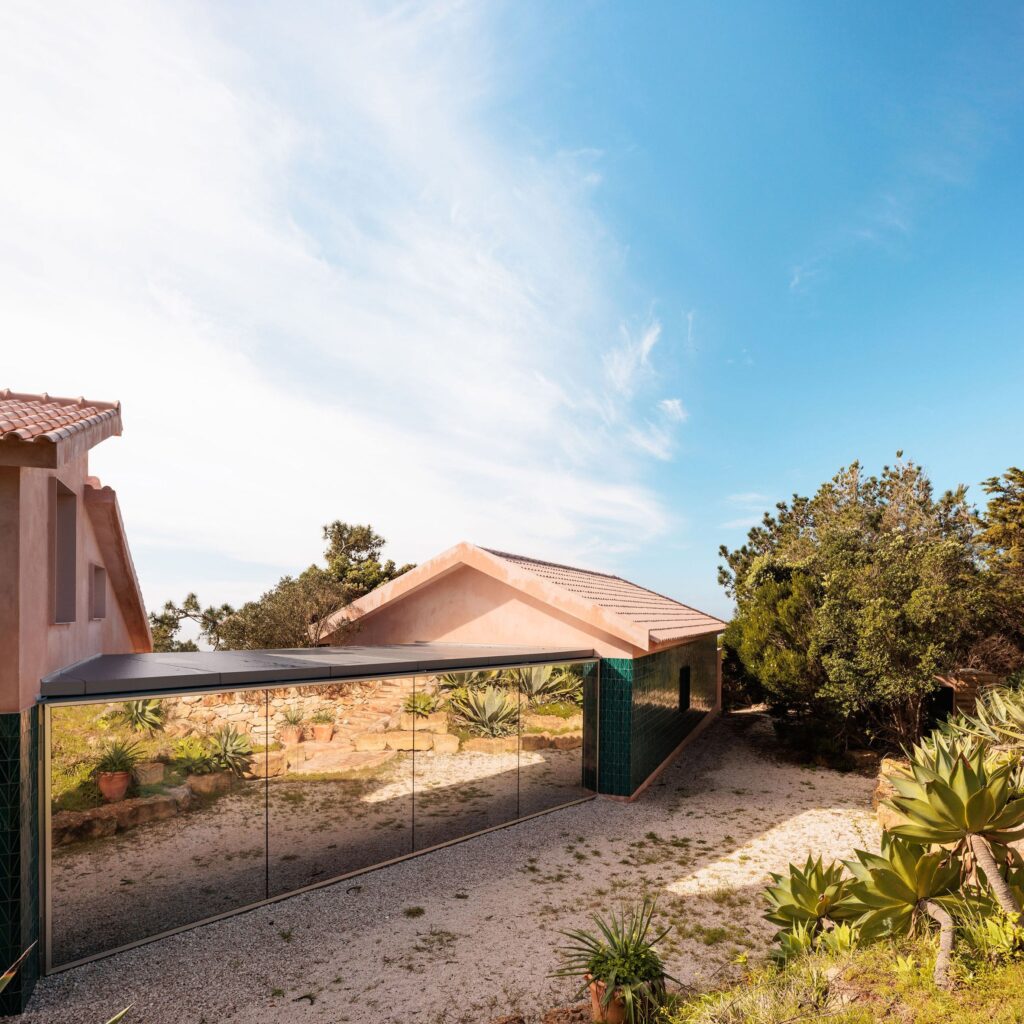
The challenge was a fascinating one: how to unite a collection of disparate, traditional structures—including the iconic cylindrical form of the old windmill—into a cohesive and modern guesthouse. The architects landed on a design philosophy that is both brilliantly simple and profoundly clever: to “mirror” the landscape. This concept unfolds in two distinct ways. The most literal interpretation is found in a brand-new extension, a volume that was in poor condition and has been reborn.
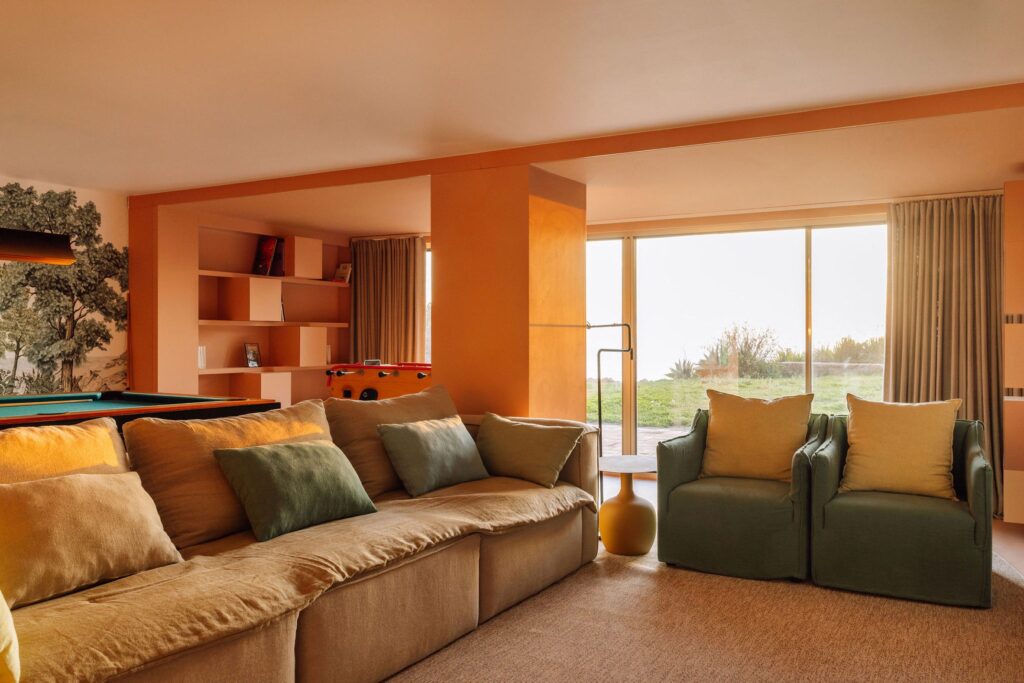
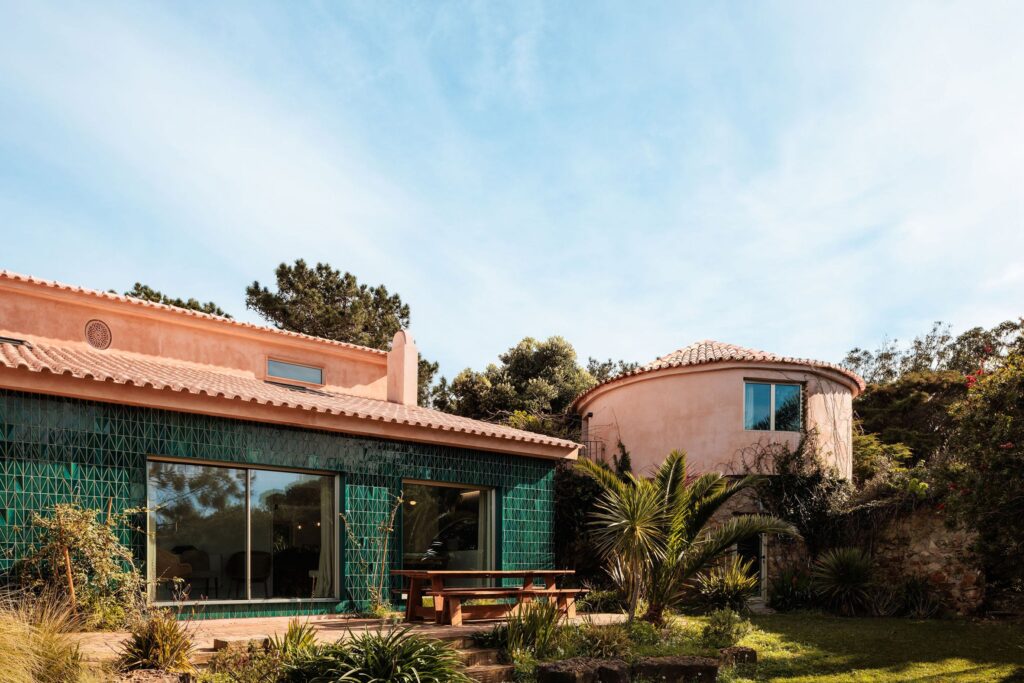
Clad entirely in highly reflective mirrored glass, this linking structure is a stroke of genius. From the inside, it offers expansive, uninterrupted views of the stunning scenery. From the outside, it performs a mesmerising vanishing act, dissolving into the surrounding rocks and vegetation, its surface a living canvas reflecting the changing light and weather.
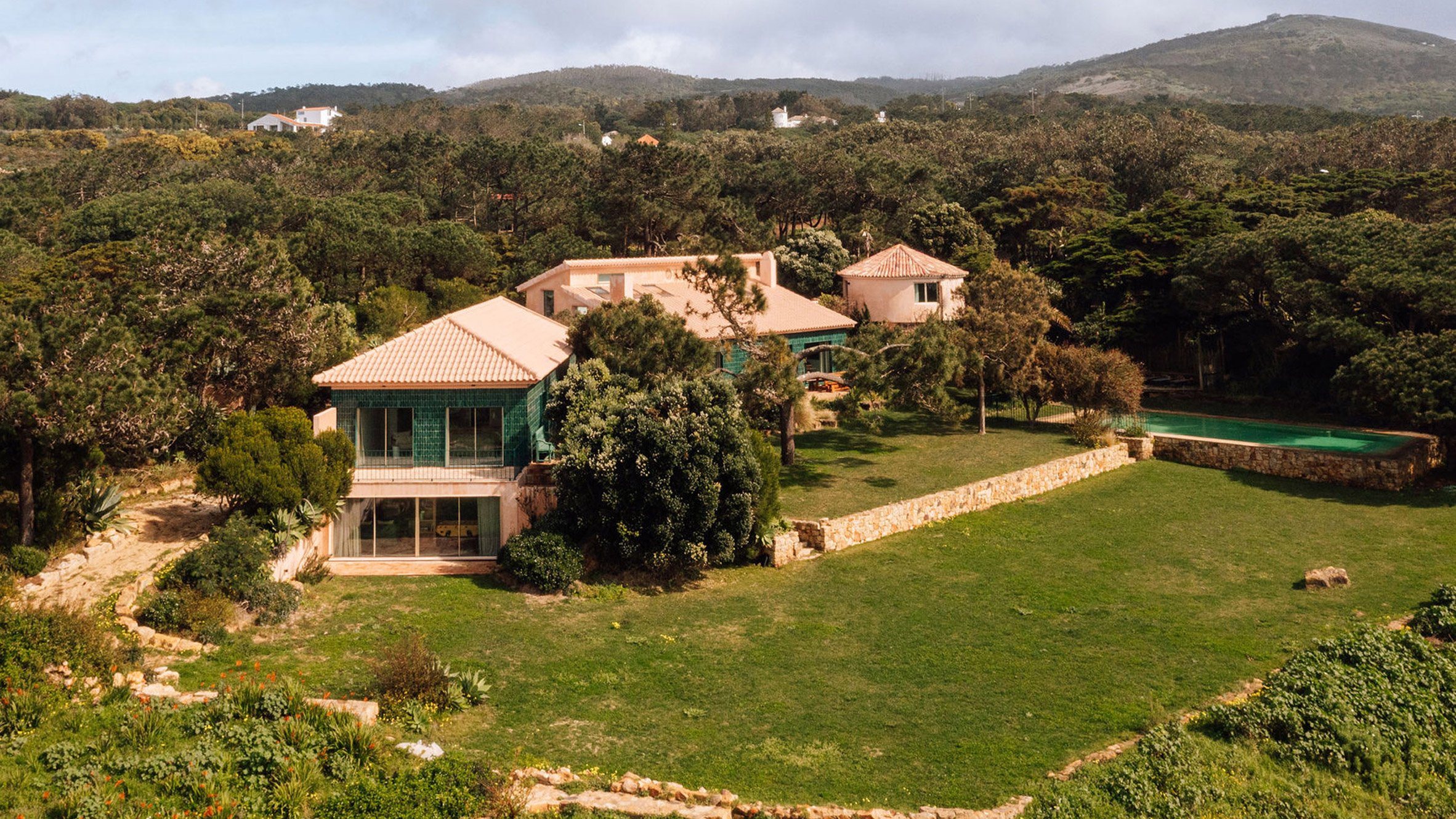
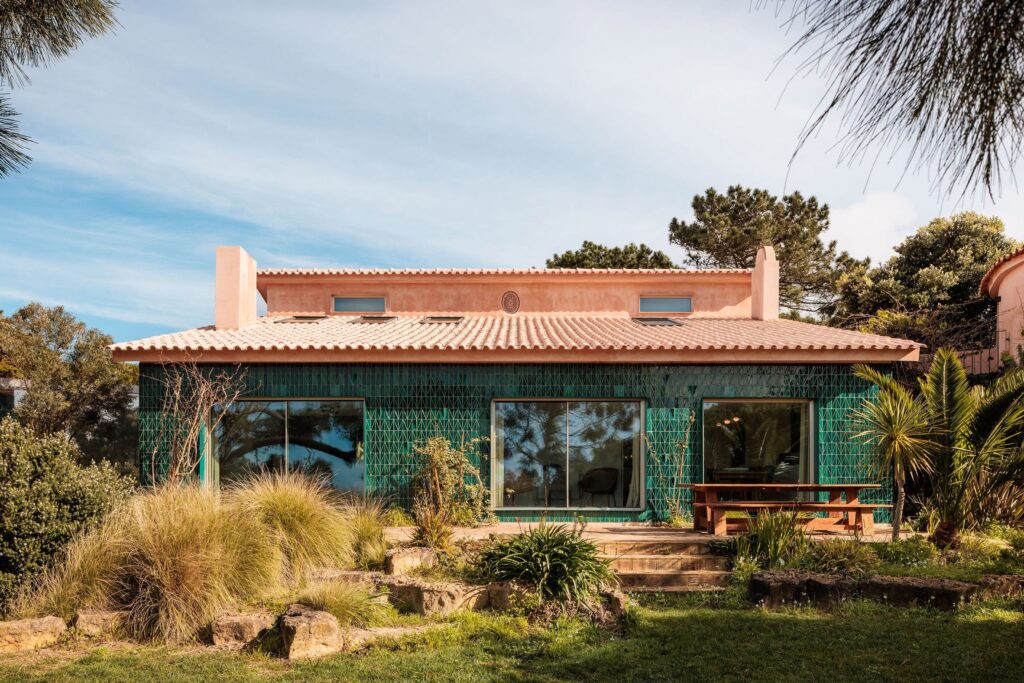
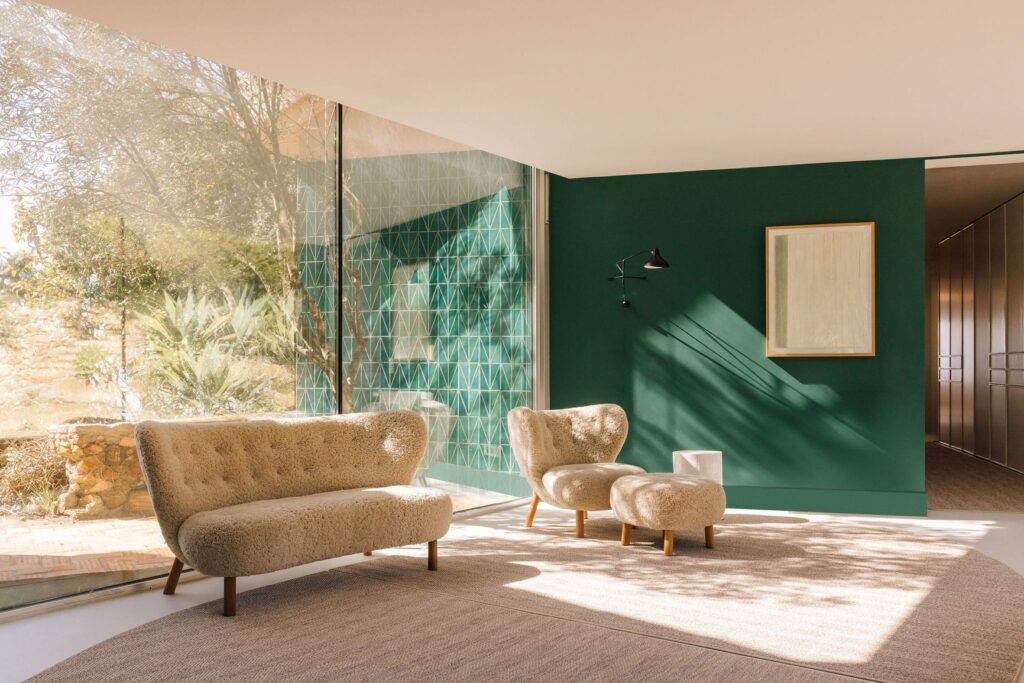
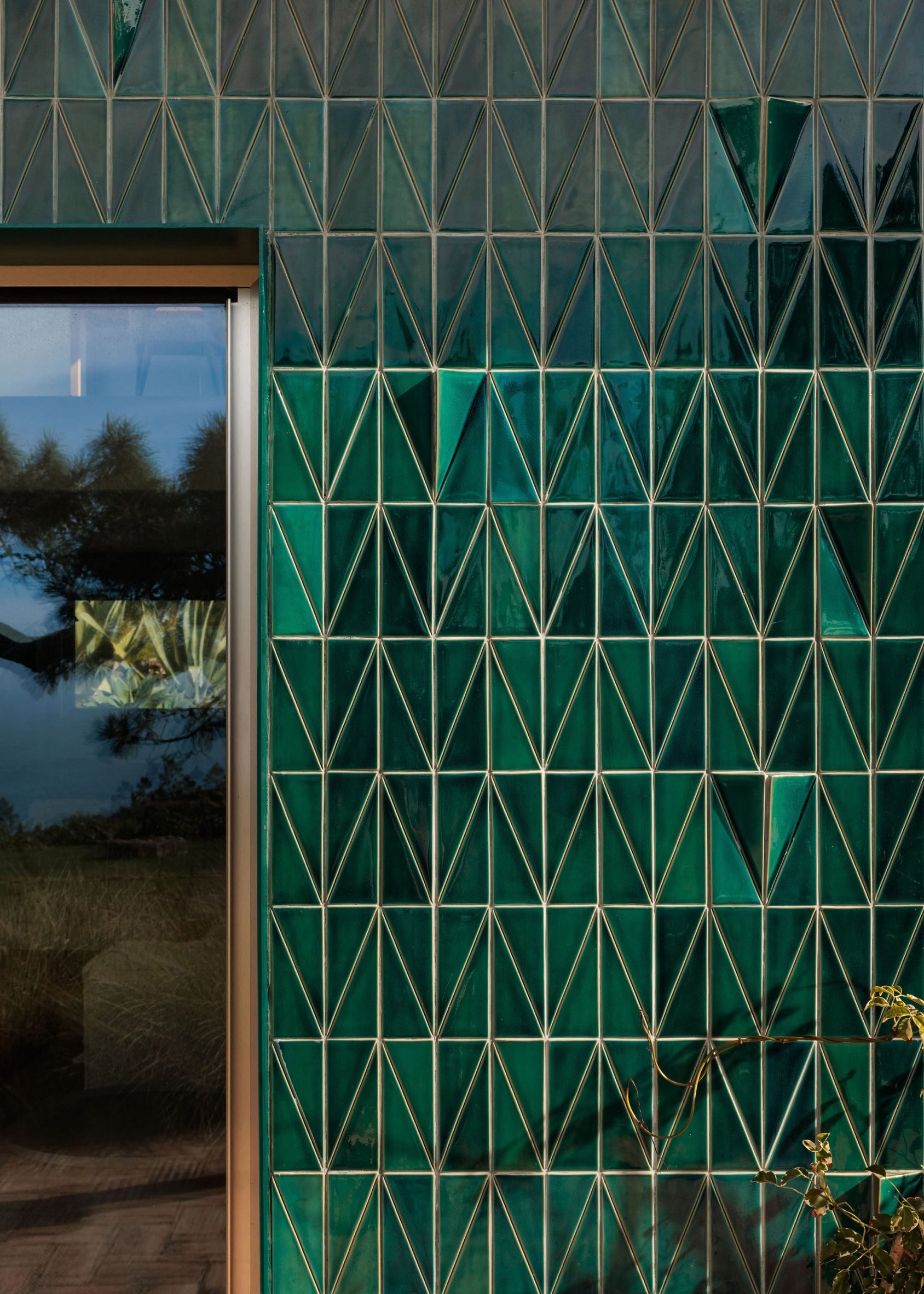
The symbolic mirroring is where the soul of the project truly reveals itself. The architects have wrapped the ground floor of the existing buildings in a skin of shimmering, triangular tiles. These are no ordinary tiles; they were handmade by artist Maria Ana Vasco Costa, and their glossy, deep blue-green tones are a direct homage to the Atlantic. Laid in a dynamic zigzag pattern, the tiles beautifully evoke the ceaseless movement of the ocean, creating a visual energy that animates the entire property.
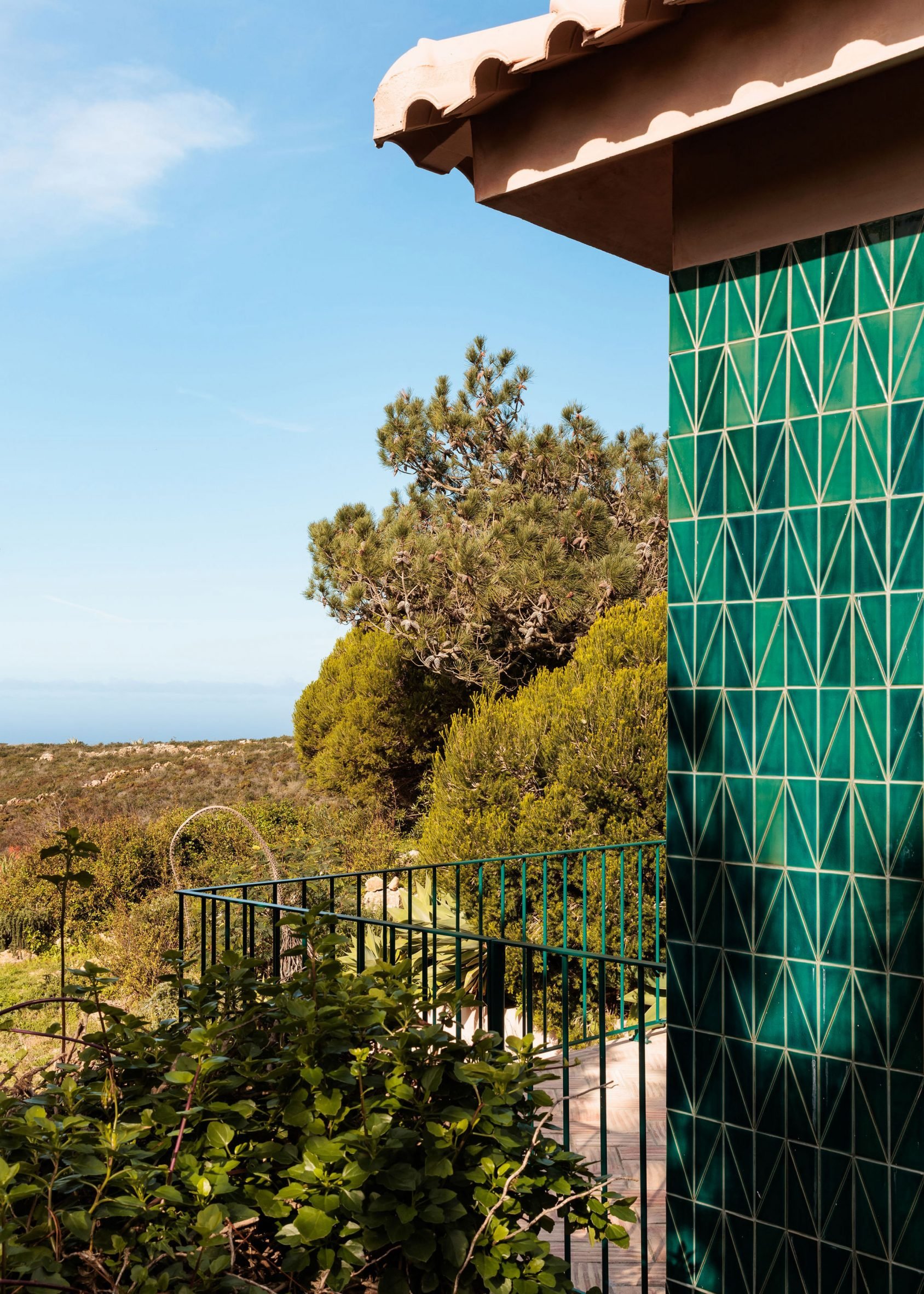
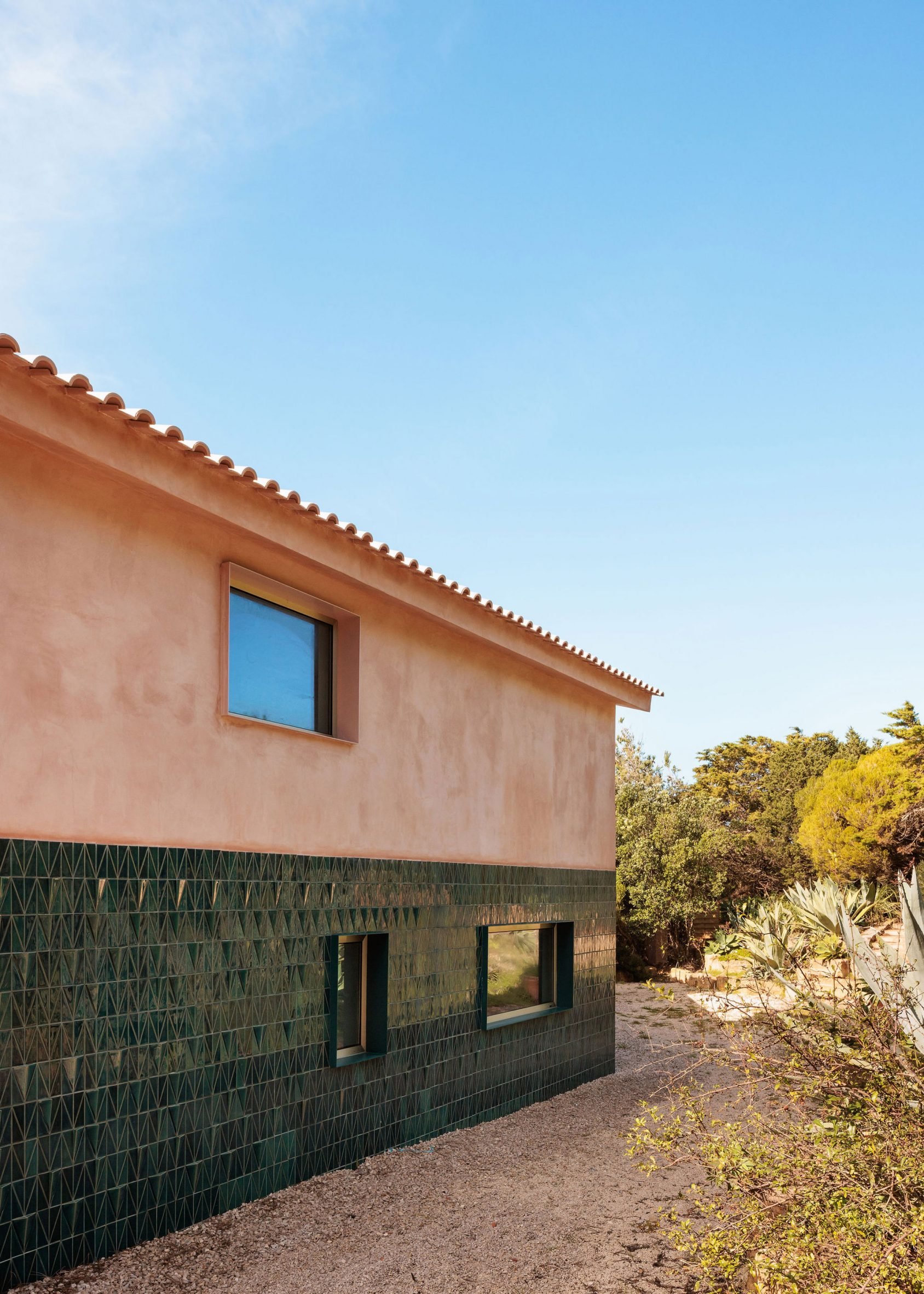
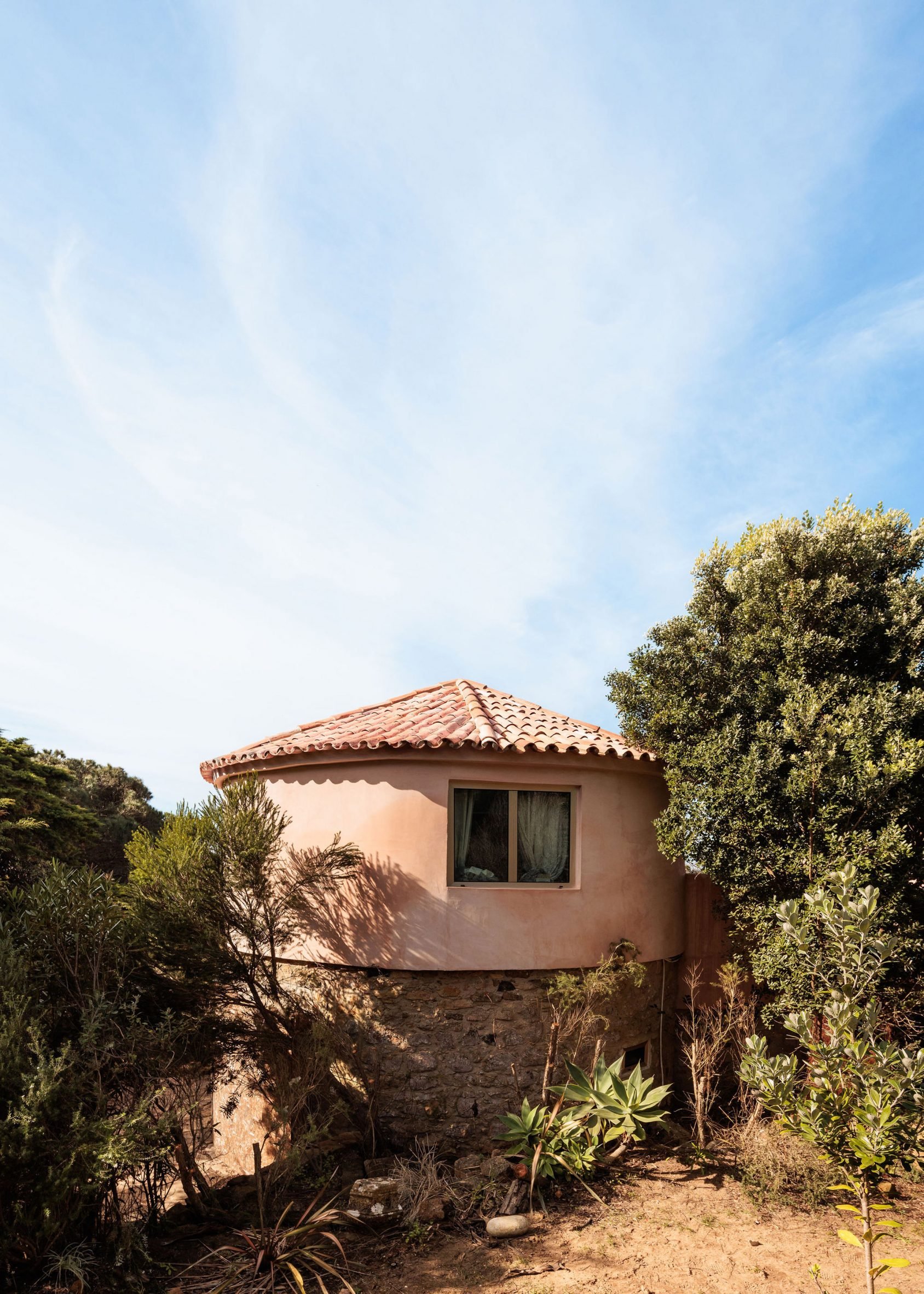
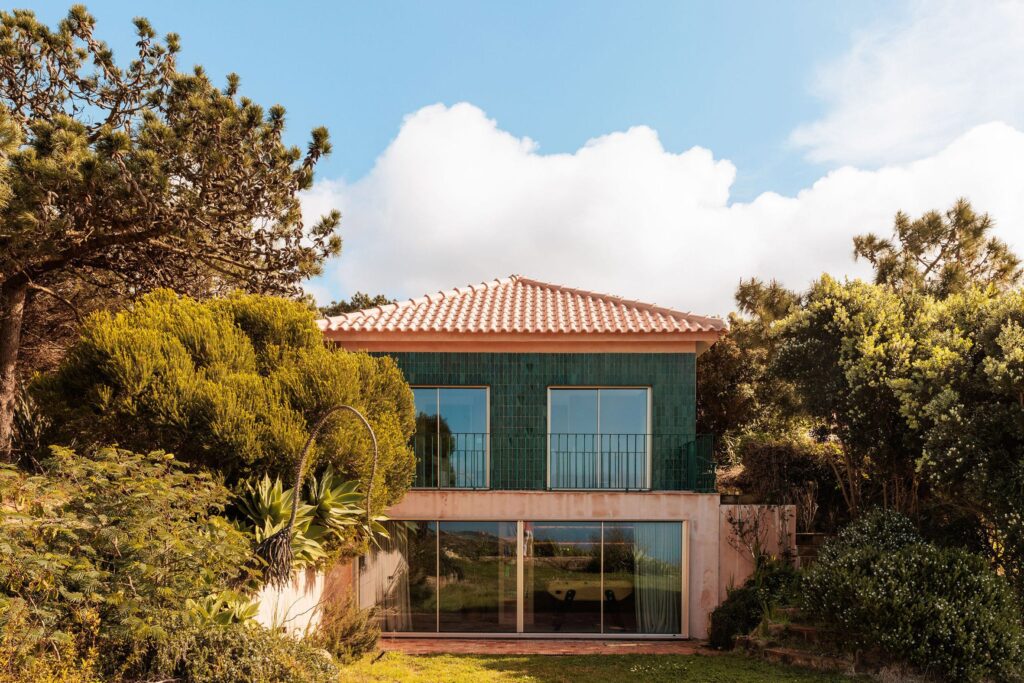
It’s a detail that elevates the design from mere architecture to a piece of inhabitable art. Above this aquatic base, the buildings are finished with a terracotta-toned lime render, a colour carefully chosen to match the local Cabo stone and traditional roof tiles, grounding the entire complex firmly in its earthy, cliffside setting.
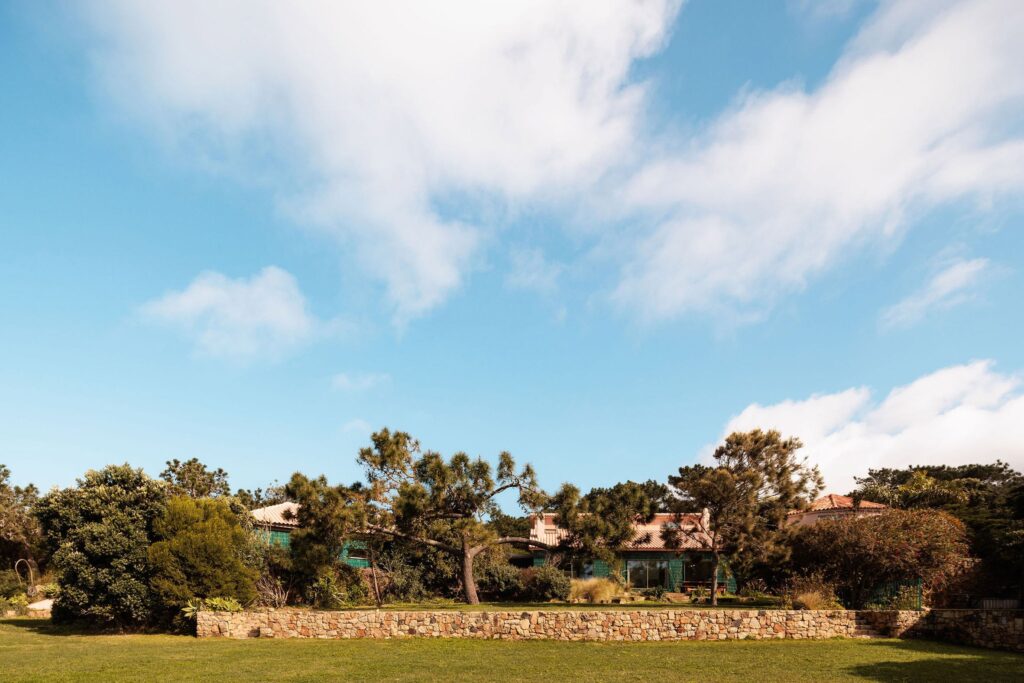
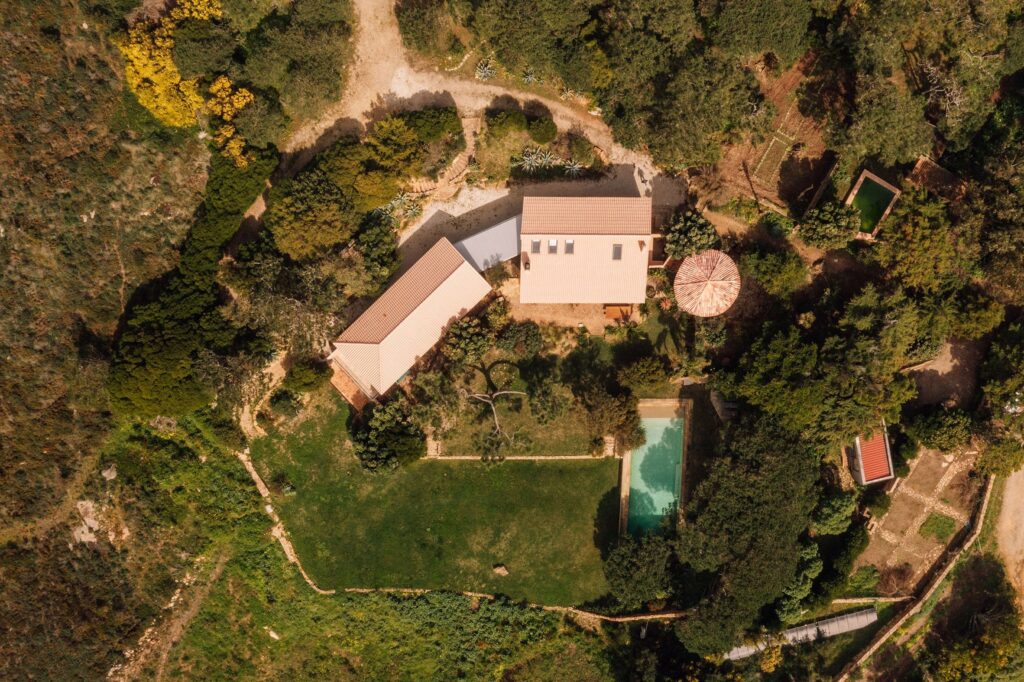
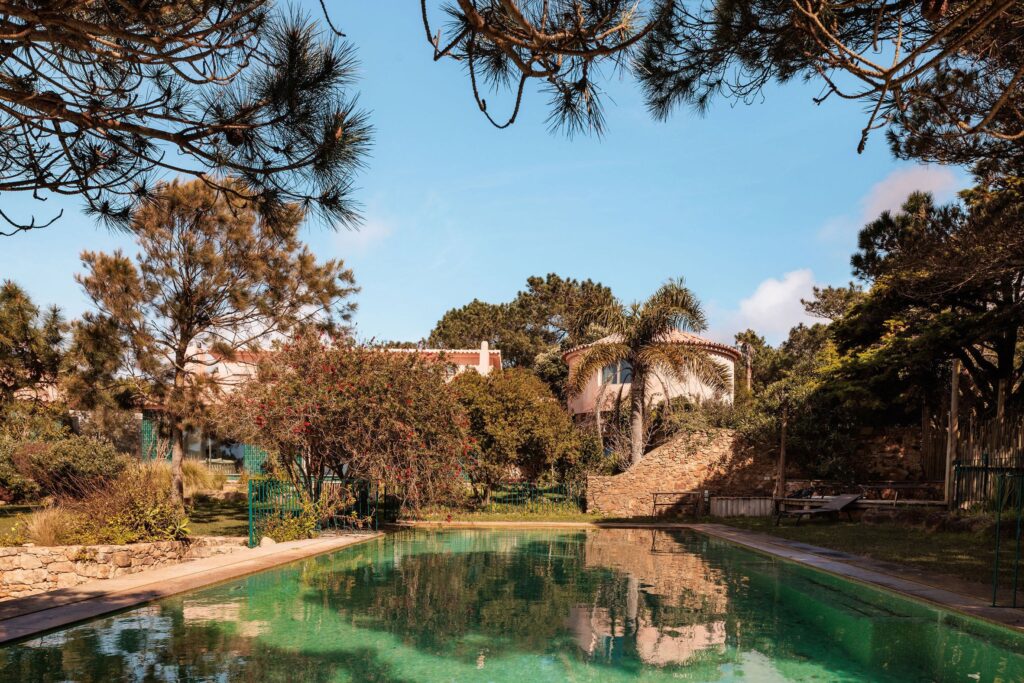
This thoughtful dialogue between the built form and its environment extends to the living experience. The buildings are oriented towards the sea, opening onto a beautifully paved patio and a series of terraced lawns that cascade down the plot, incorporating a stunning swimming pool to the south—the perfect perch from which to soak in the dramatic coastal views.
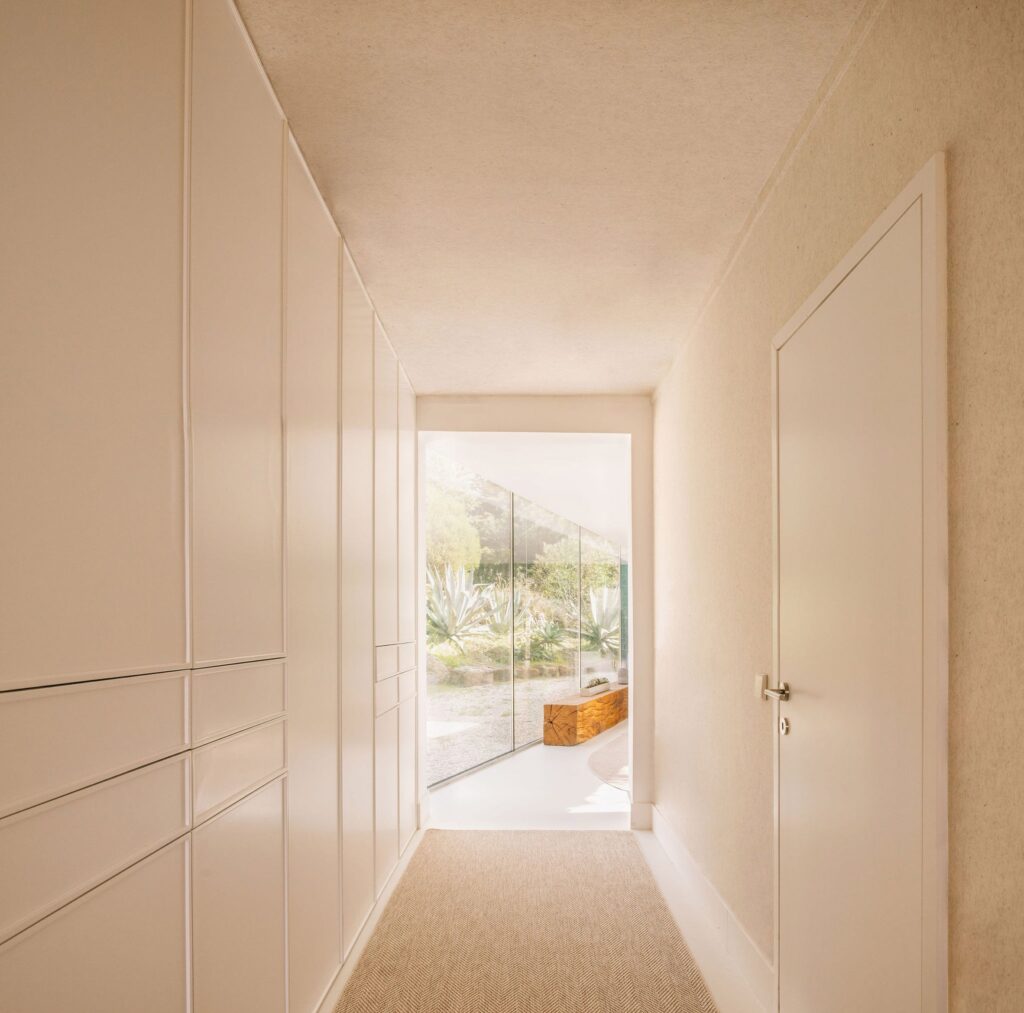
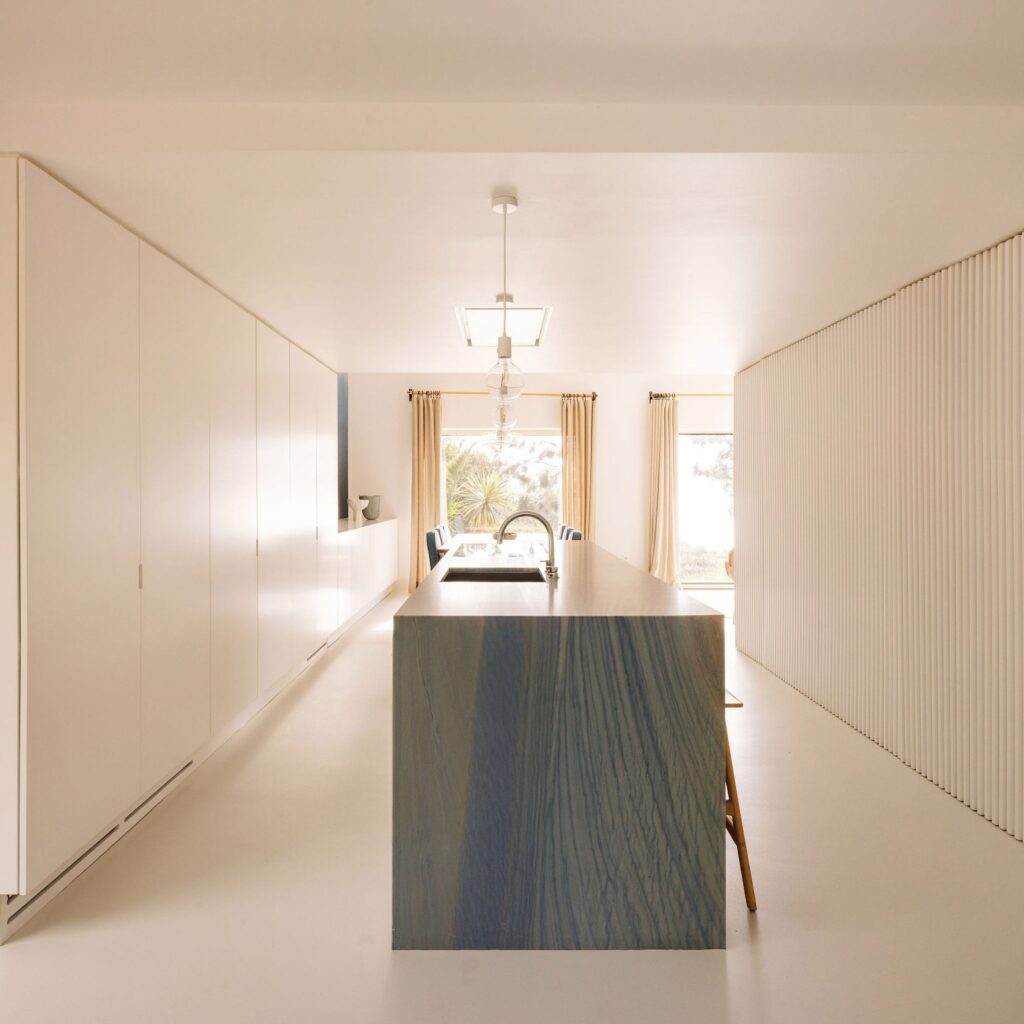
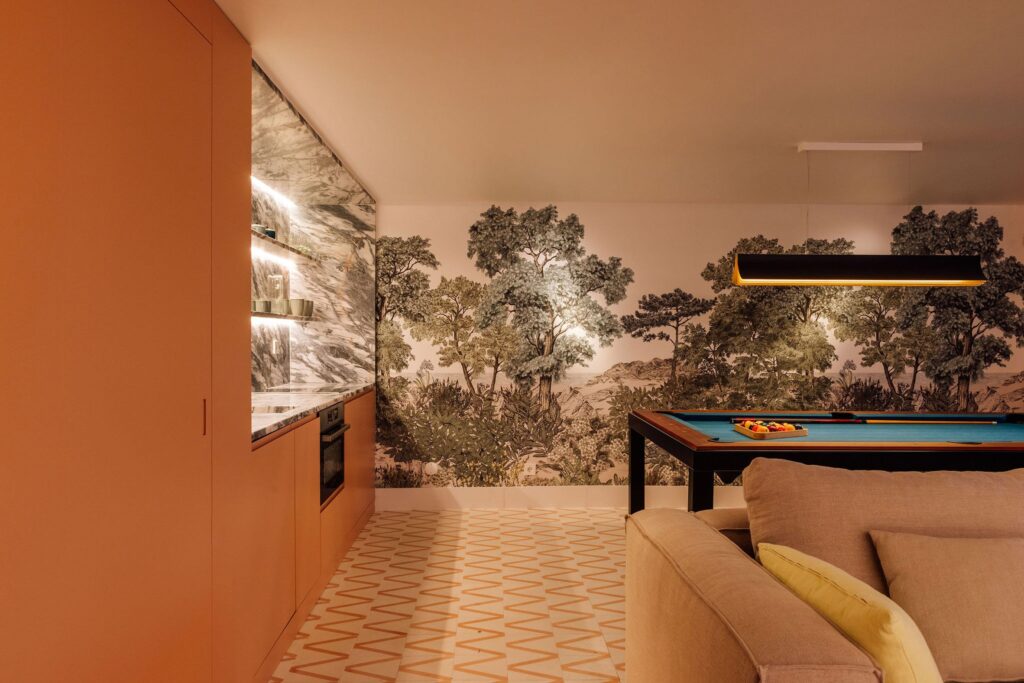
The interiors, guided by locally available materials, continue the narrative. Walls are painted a pale pink that subtly references the hue of the Cabo stone, while countertops of exquisite Azul Macaúbas marble and floors of classic cement tile create a serene and beautifully considered sanctuary. The original windmill now stands as a charming, standalone guesthouse, offering a unique and private retreat. AIP House Azóia is more than just a place to stay; it is a masterclass in architectural storytelling, a visual conversation between the past and the present, and a place we’d happily check into and never leave.