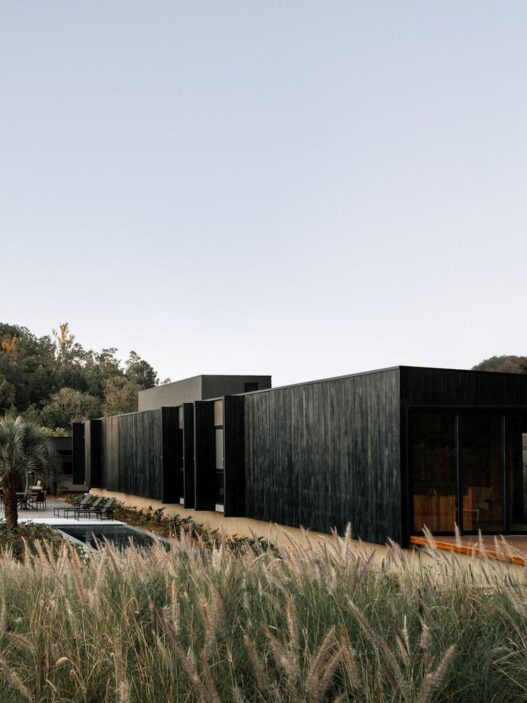











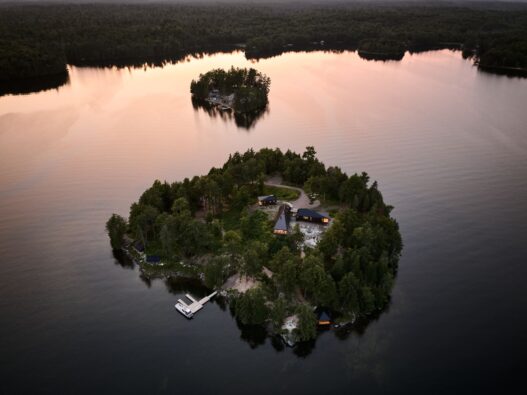
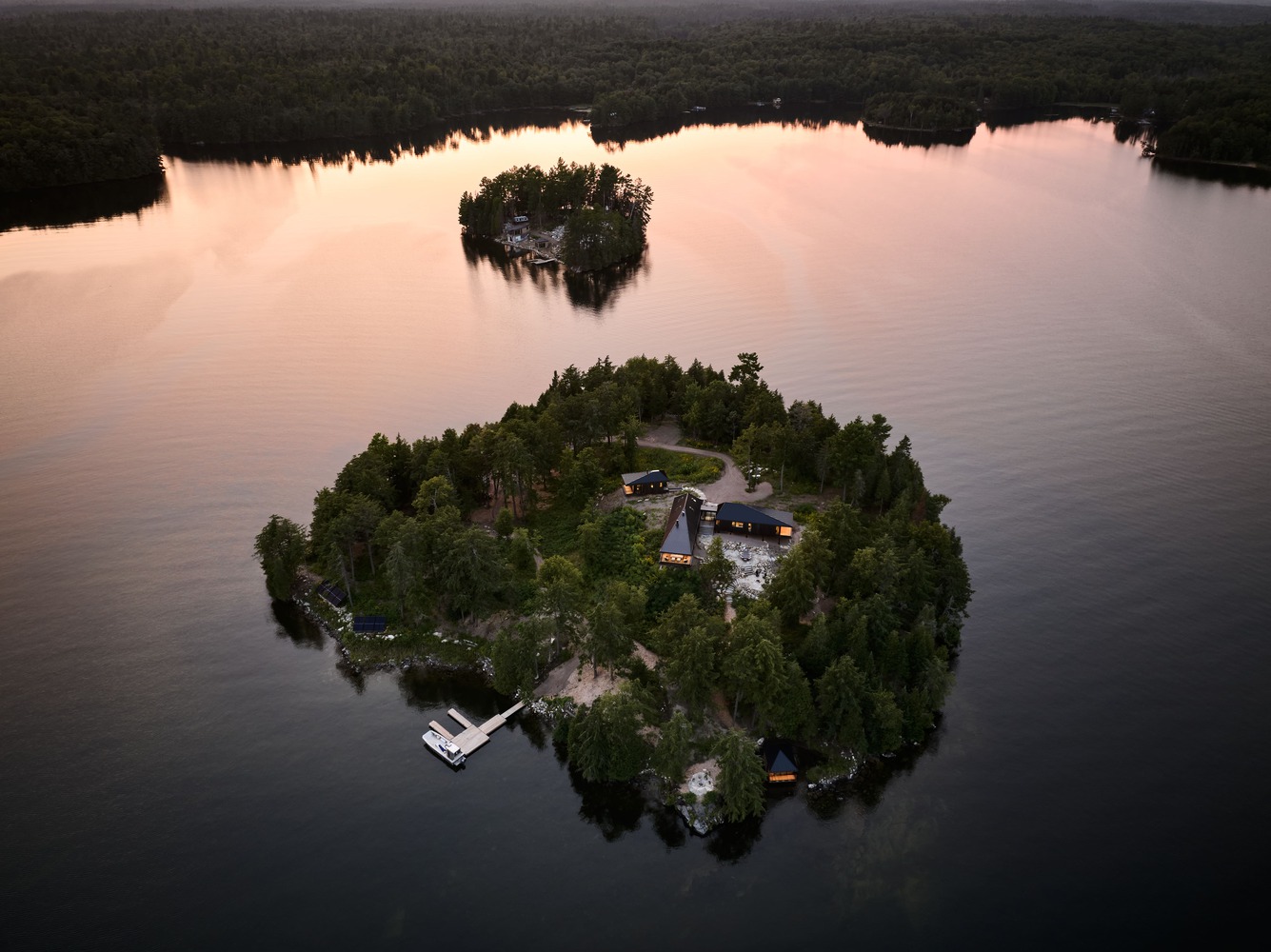
In an age where the word “cottage” often conjures images of rustic luxury defined by excess, the Armstrong Cottage by Peter Braithwaite Studio offers a far more compelling narrative.
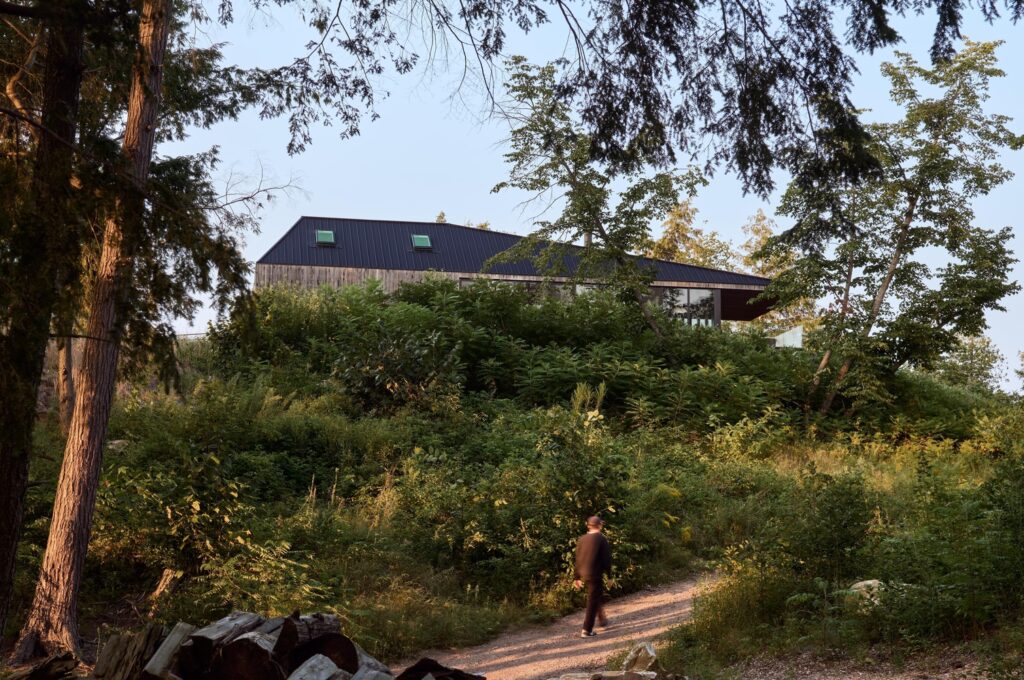
This is not merely a house; it is a meticulously engineered retreat, a net-zero declaration of independence that proves architectural elegance and profound ecological responsibility are mutually inclusive goals.
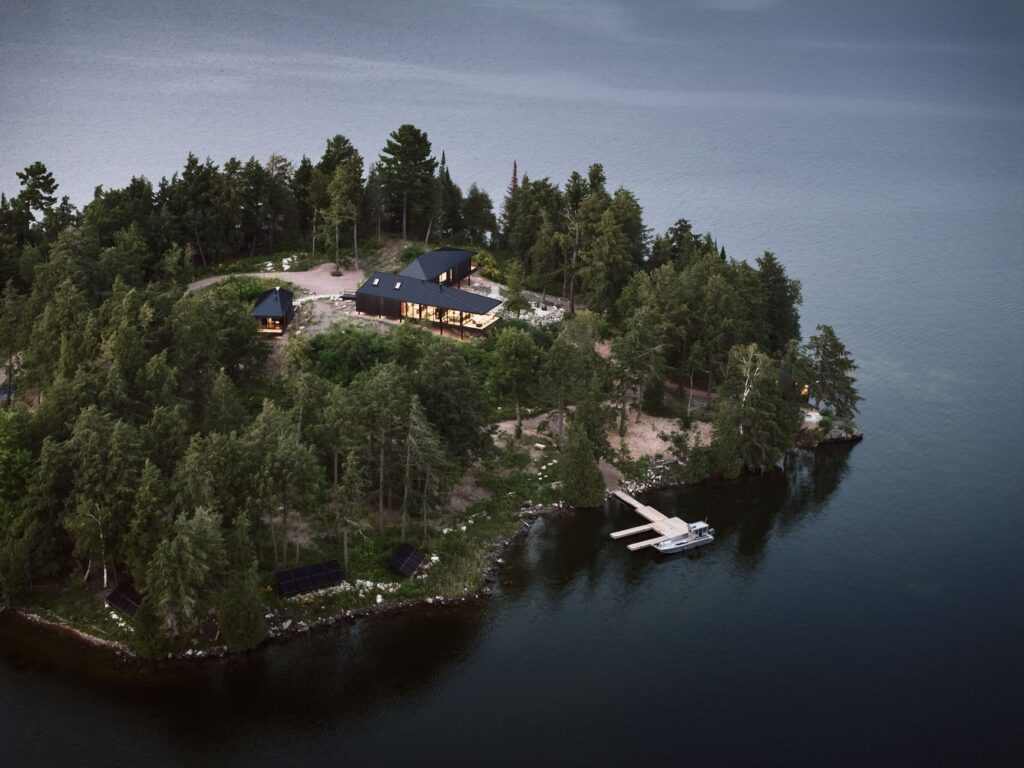
Commissioned by a young Toronto-based family seeking to bottle the nostalgic magic of their own childhood summers spent on this very lake, the project began not with blueprints, but with a logistics challenge worthy of an expeditionary force.
The island site, remote and rugged, dictated a unique construction strategy. The design process became an anxious coordination between the drawing board and the elements.
Imagine the design team commissioning barges to float materials over open water, or calculating the precise moment in winter to transport heavy machinery across a frozen lake, all while constructing docks capable of adapting to the seasonal shift in water levels.
This succession of logistical hurdles became part of the home’s DNA, ensuring that every element that arrived on site was absolutely essential.
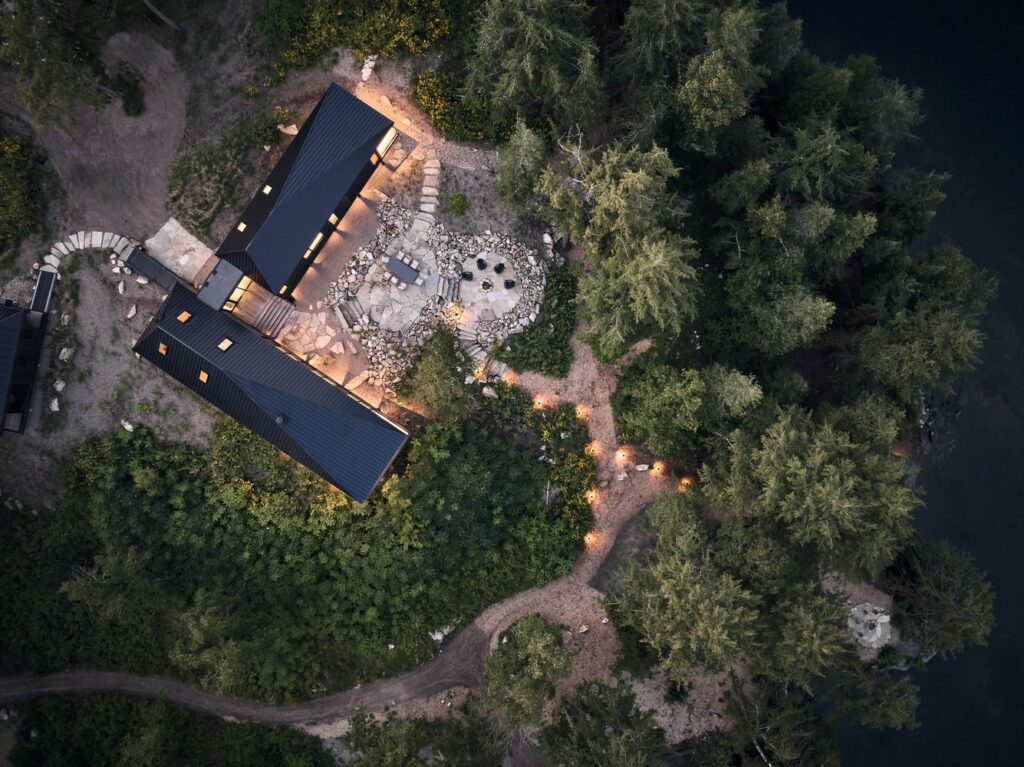
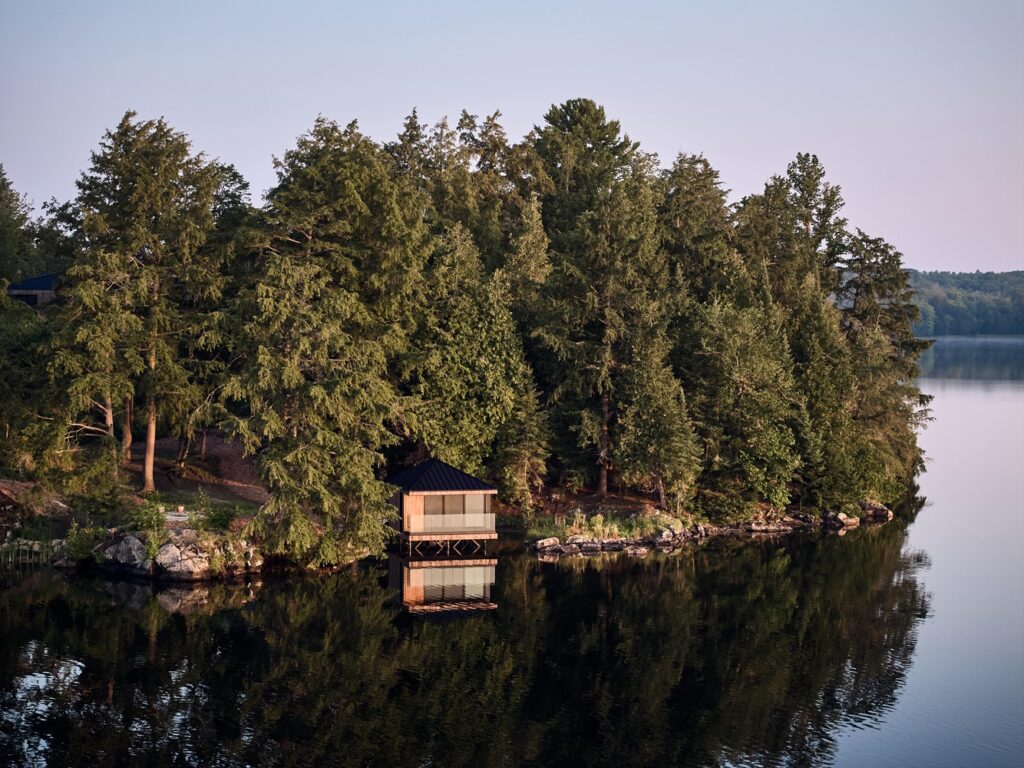
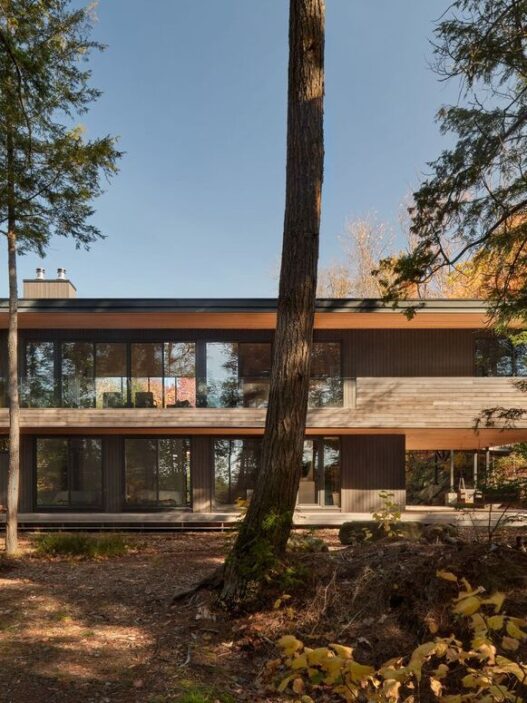
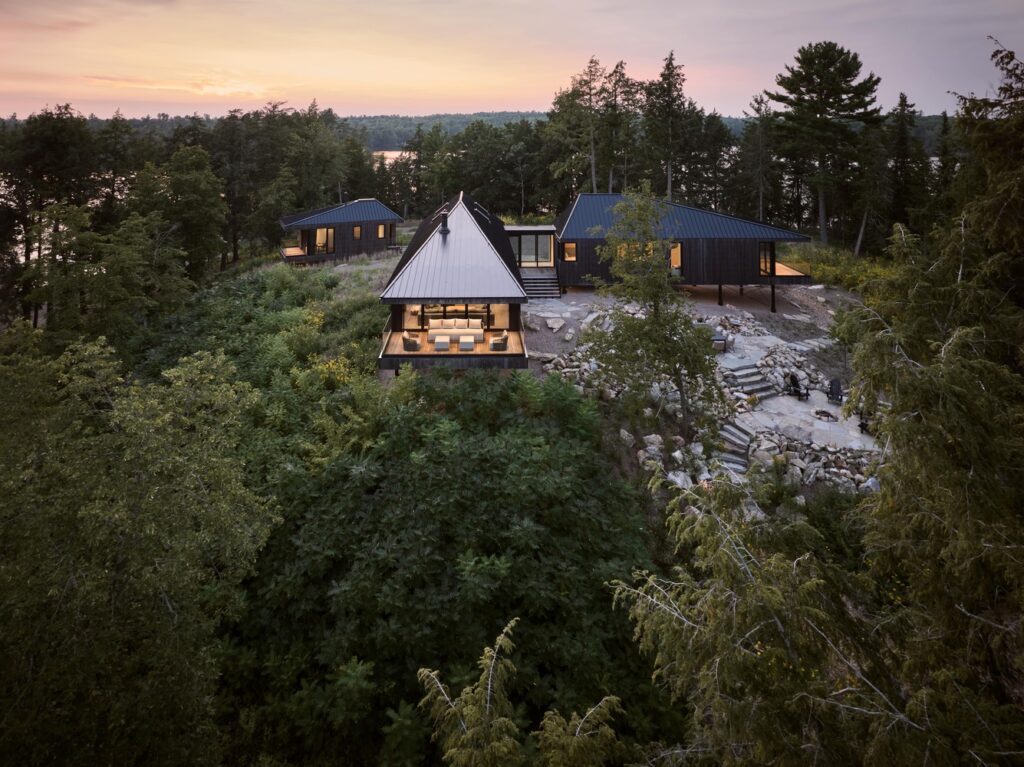
The architectural solution itself is a profound lesson in ‘touching the earth lightly.’ Rejecting the heavy, invasive foundations typical of residential construction, Peter Braithwaite Studio conceived the dwelling as two primary volumes—one for sleeping, one for living—each placed on elegant stilts within naturally occurring clearings in the forest.
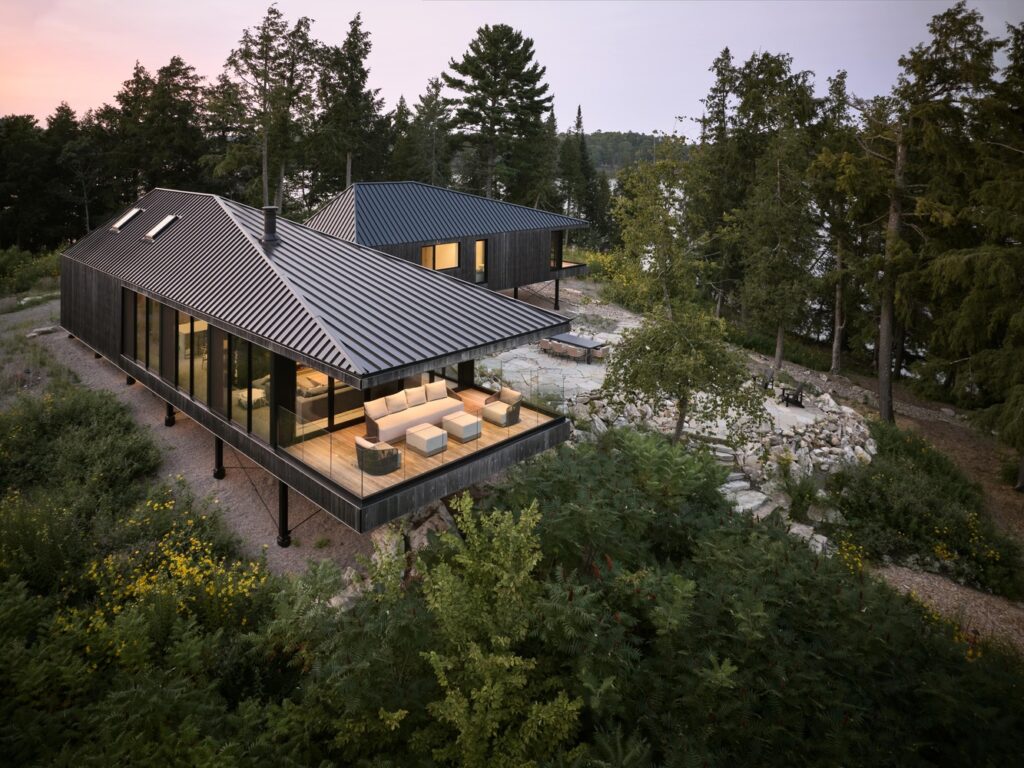
This strategic elevation is more than just a stylistic choice; it’s an act of ecological stewardship. By fastening slender steel wide flange columns directly to the native bedrock below, the architects drastically decreased the reliance on concrete.
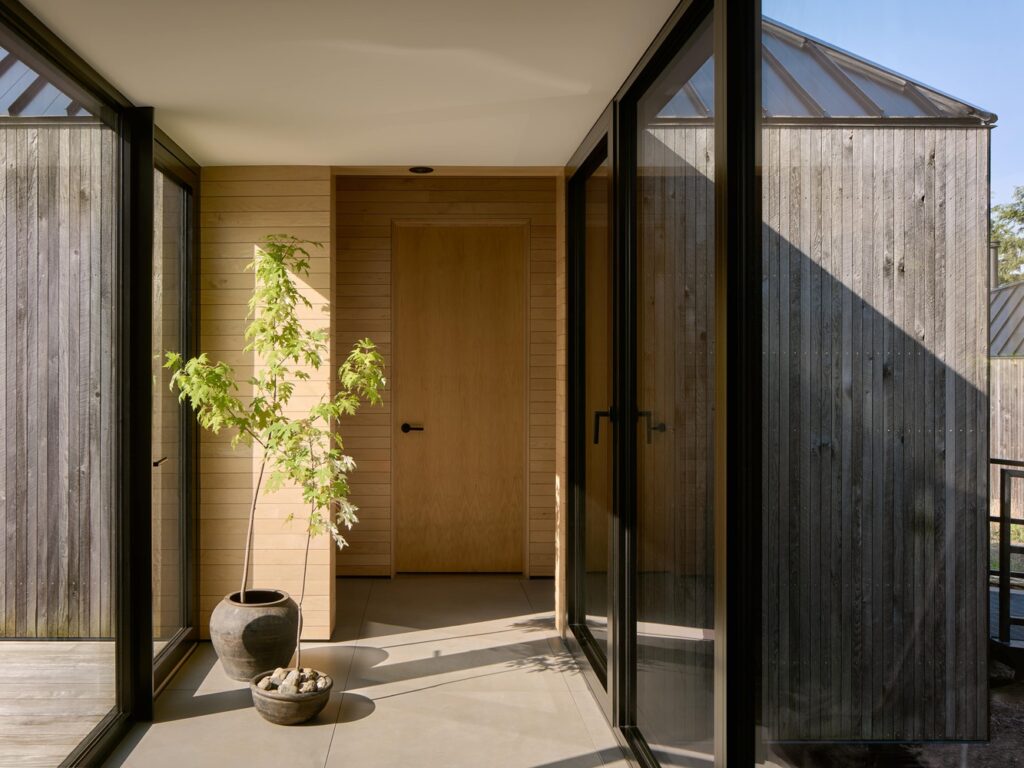
This material, with its inherently toxic qualities, was strategically minimized to protect the island’s fertile topsoil and native ecosystem, allowing the natural landscape to literally slip and thrive below the hovering forms of the pavilions.
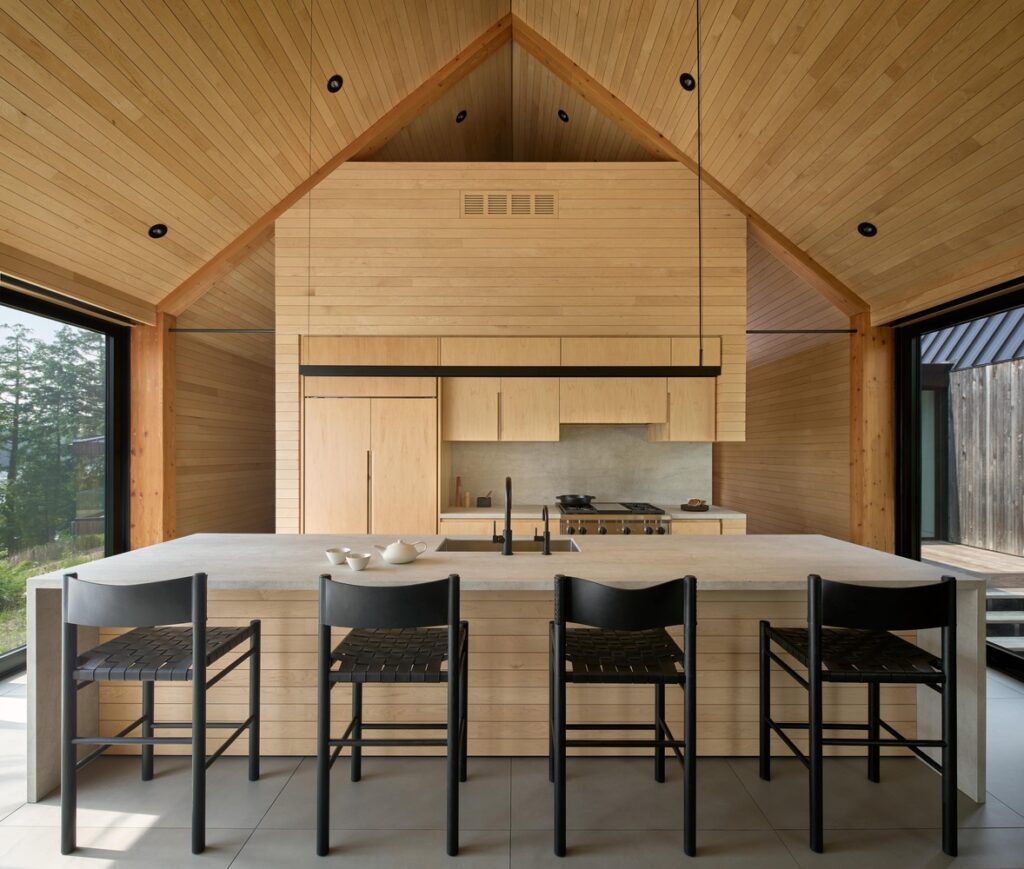
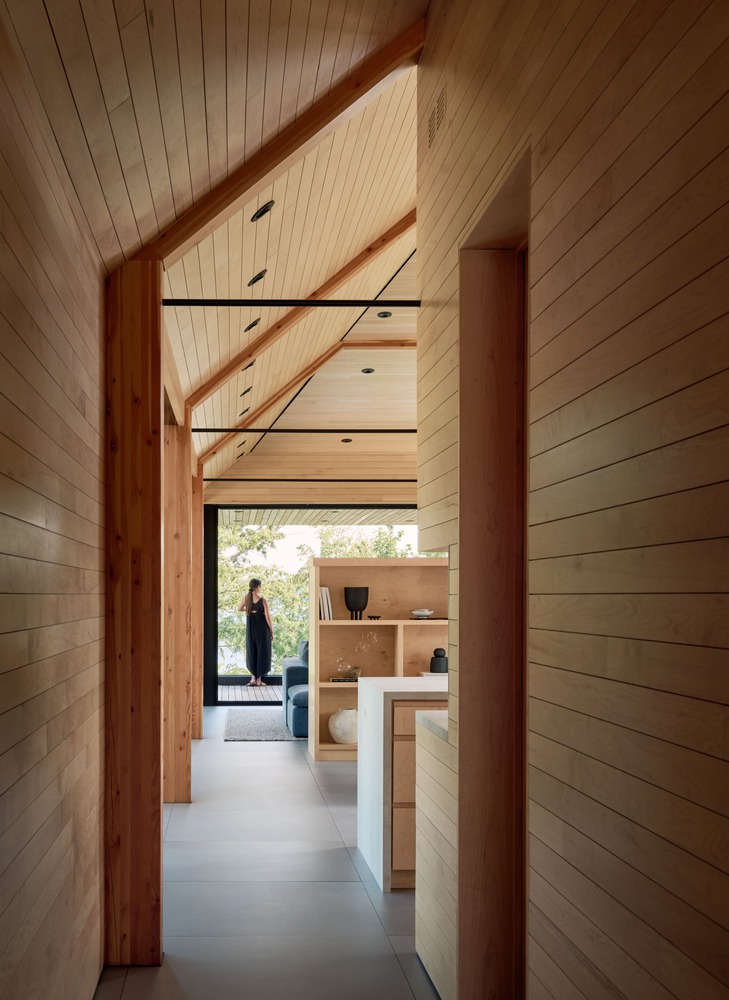
Everything above the steel columns was conceived as an intelligent ‘kit of parts’ designed explicitly for ease of transportation and assembly. This allowed for structural members—including wood and steel beams, lam beam rigid frames, and wood rafters—to be easily shipped by barge and assembled on site with simple steel plates and bolts.
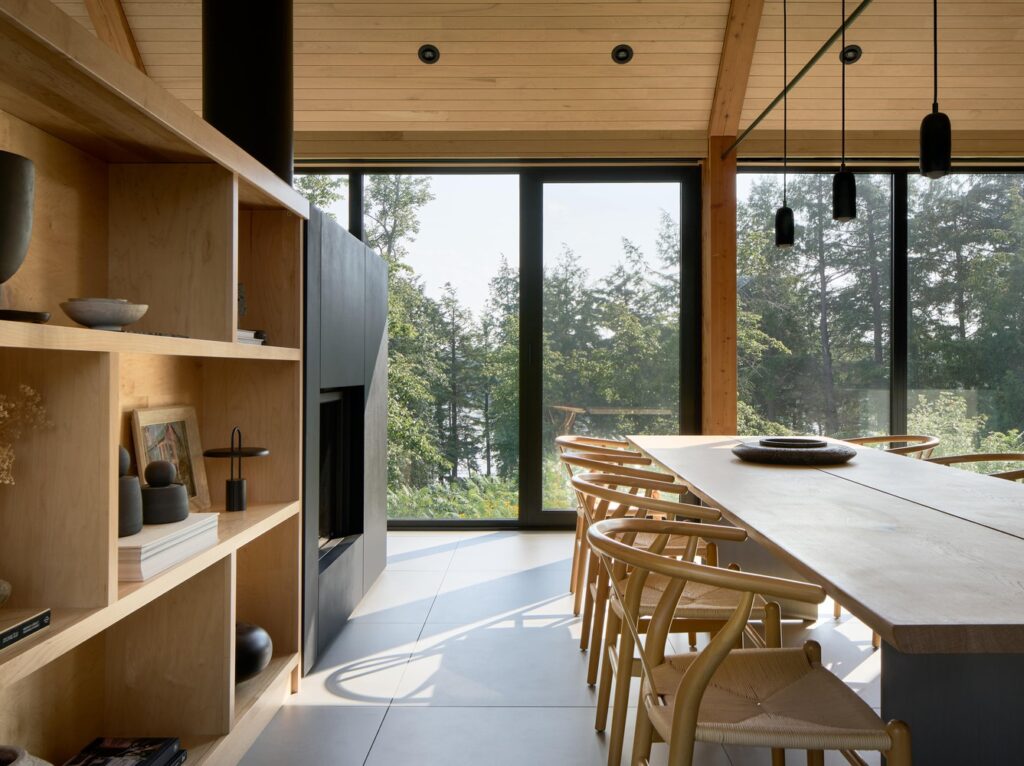
This modular, considered approach to construction is a core tenet of the studio’s philosophy, demonstrating their commitment to an integrated approach where the architect and craftsperson work together to streamline efficiency and quality.
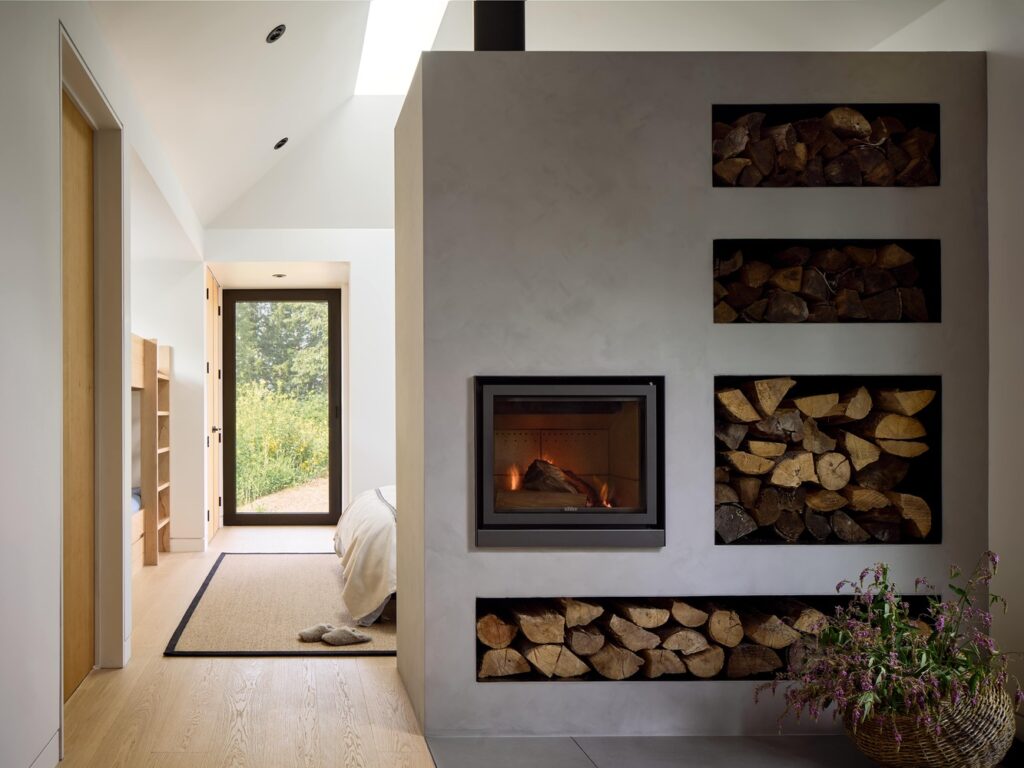
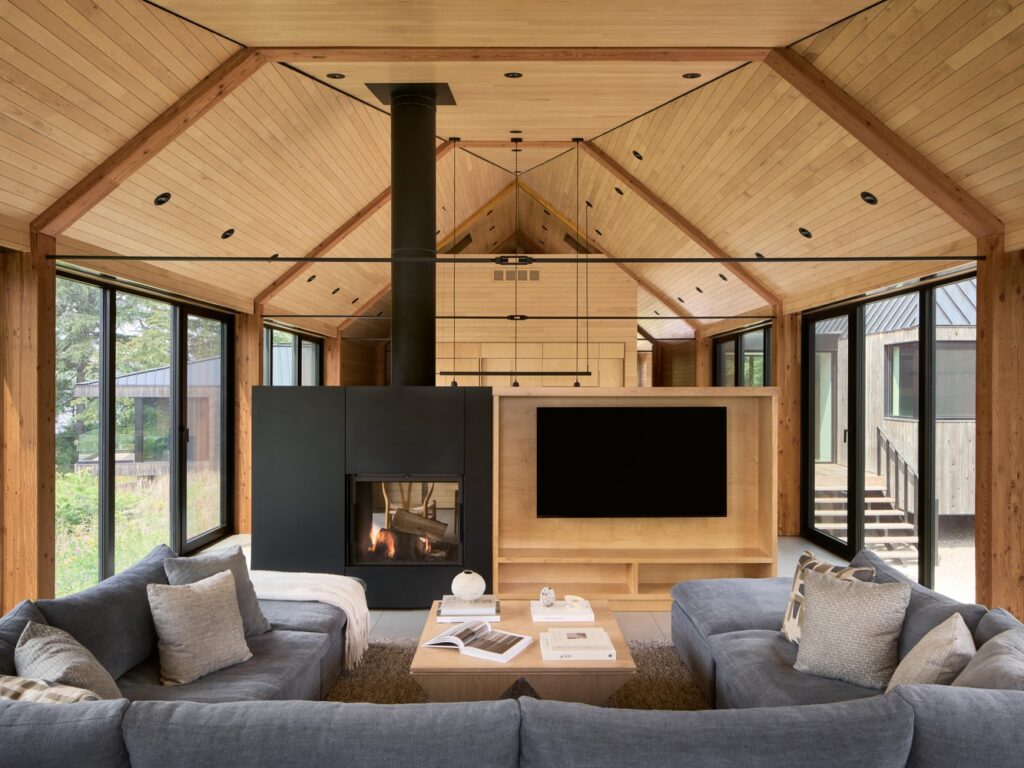
The result is a structure that appears lightweight and almost ethereal, resting within the tree canopy while remaining structurally robust enough to withstand the rigours of its isolated environment.
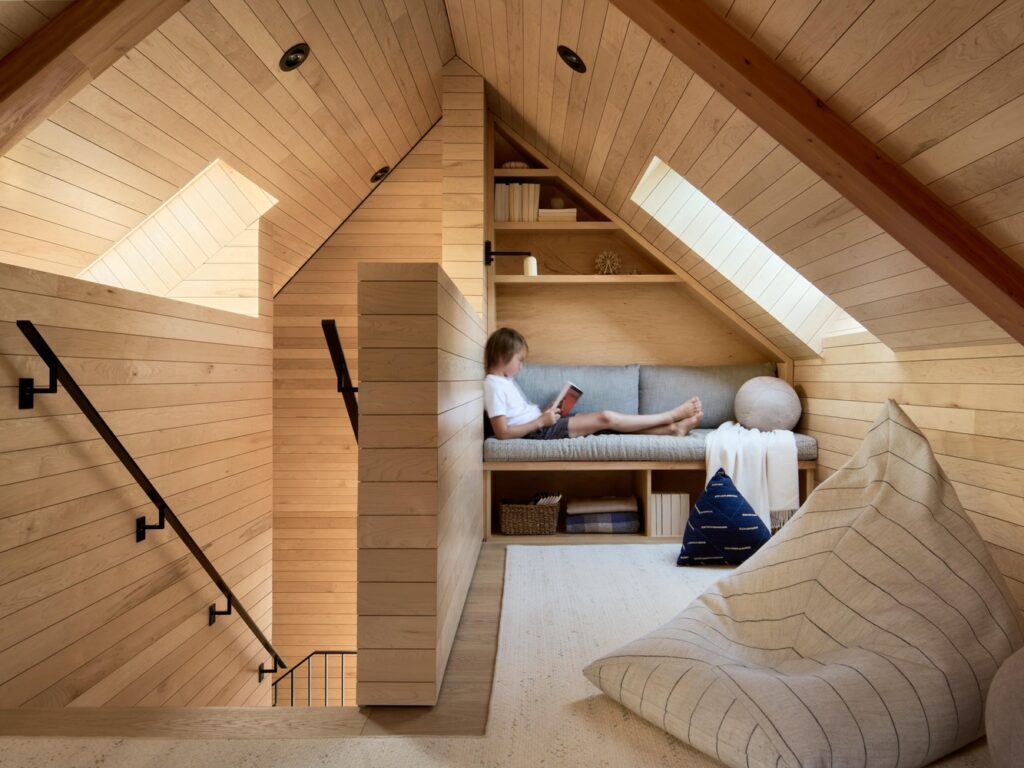
Beyond the structural integrity, the project’s overarching goal of being an off-grid, net-zero family destination meant environmental concerns guided every choice.
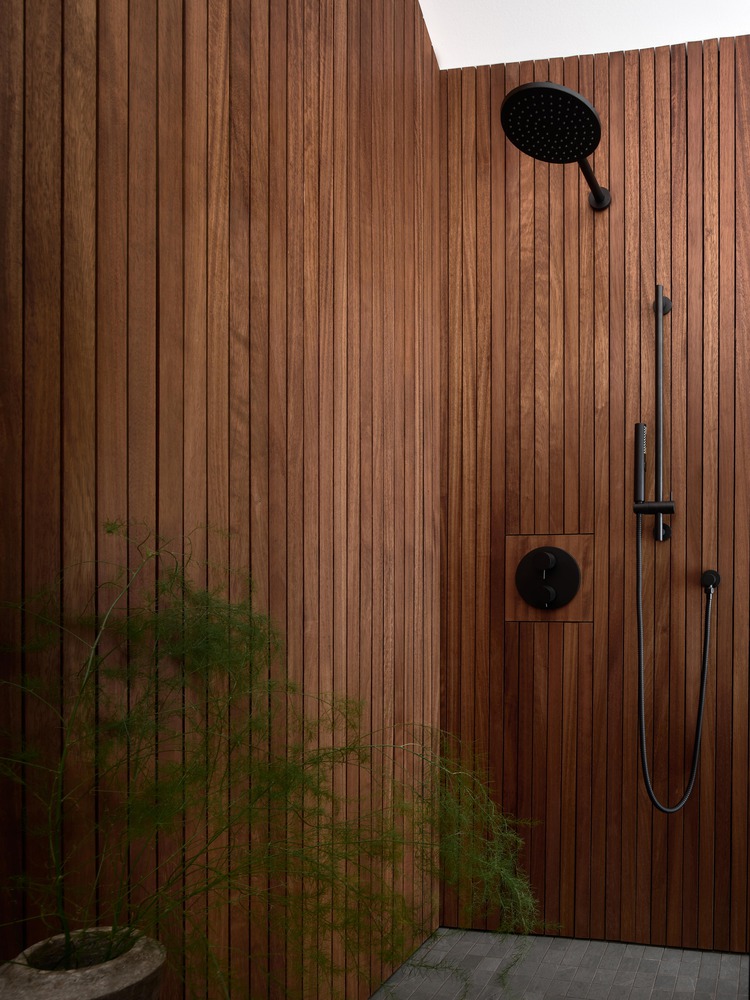
The designers meticulously ensured that all building systems were highly efficient, sustainable, and possessed low life-cycle embedded energy.
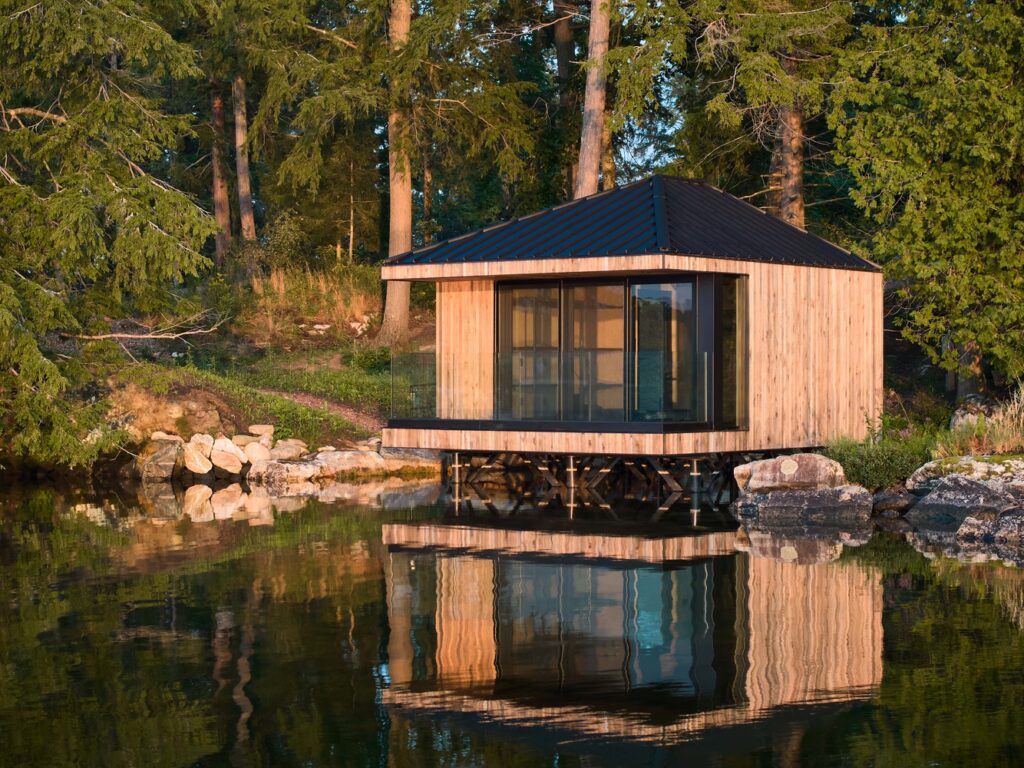
The Armstrong Cottage is a rare and powerful achievement in modern Canadian architecture, showcasing how thoughtful design, born from necessity and a deep respect for place, can transform a complex, isolated site into a beautiful, self-sustaining sanctuary where the owners can genuinely connect with nature and forge new family memories.
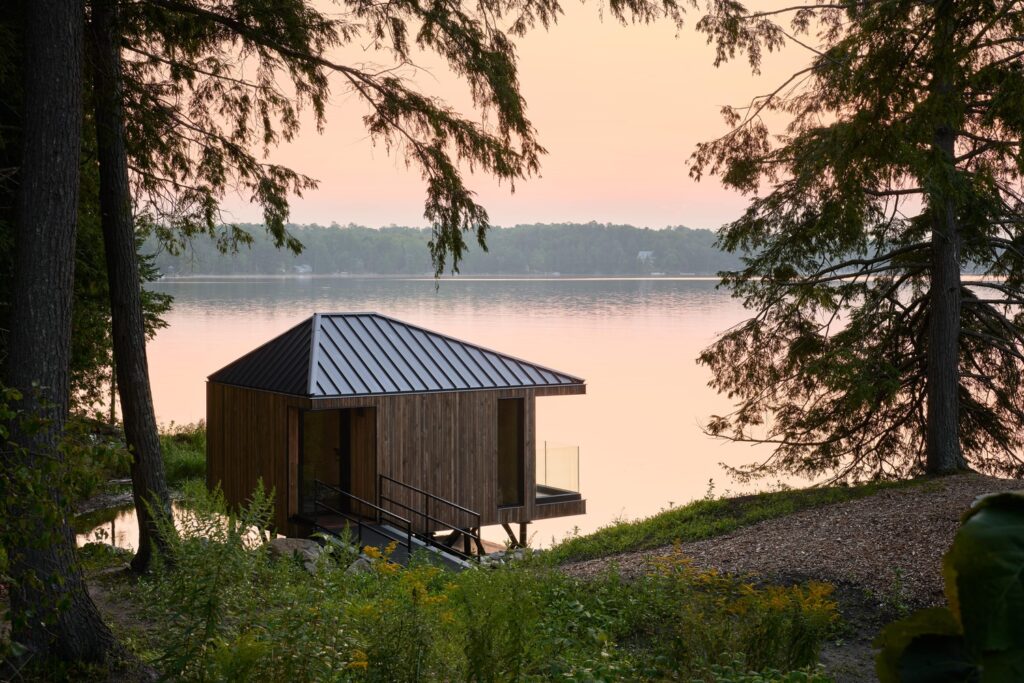
It is a stunning, quiet rebuke to the heavy hand of traditional building, proving that the greatest luxury is often found in perfect efficiency and respectful lightness.
Images: James Morley