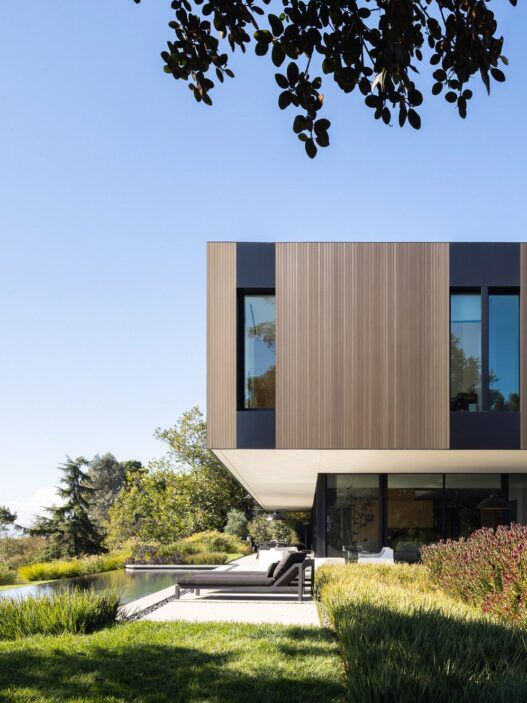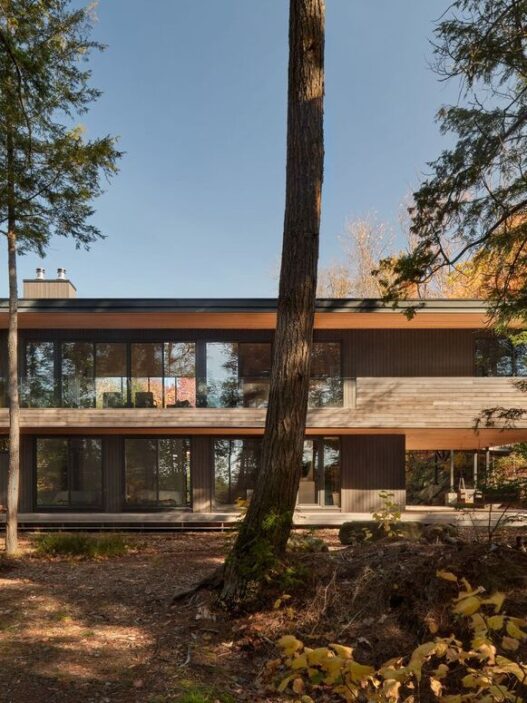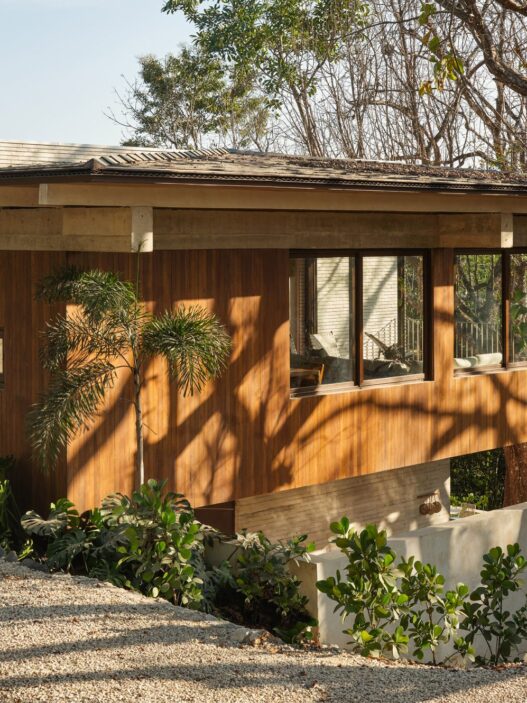











Here at The Coolector, we’ve got a real soft spot for architecture that doesn’t just occupy a space but truly becomes one with it. So, when we stumbled upon Eagle House by the Stanley Office of Architecture, nestled in the rugged Kootenay region of British Columbia, it was love at first sight. This isn’t just a house; it’s a jaw-dropping response to one of nature’s most stunning, yet demanding, canvases.
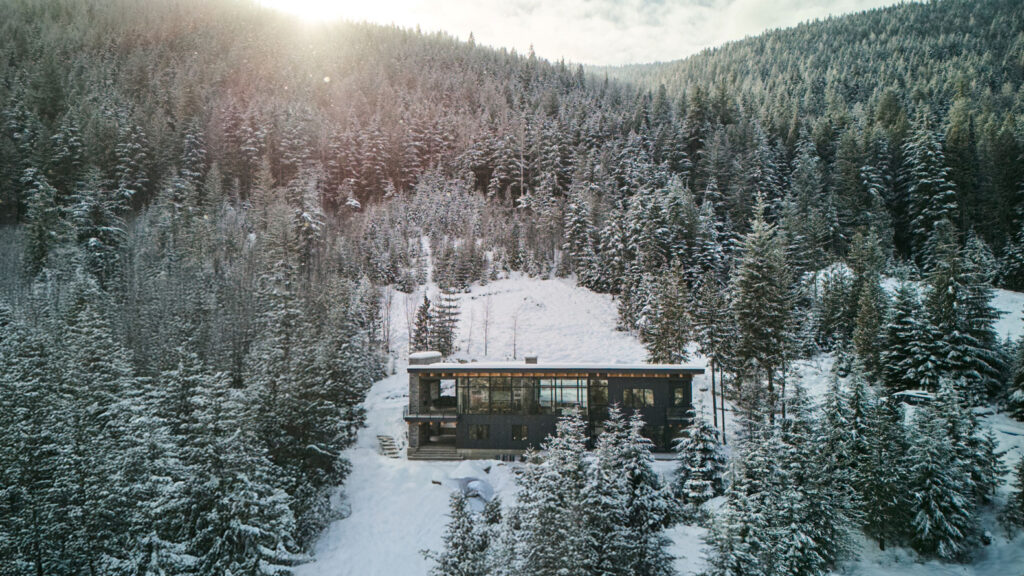
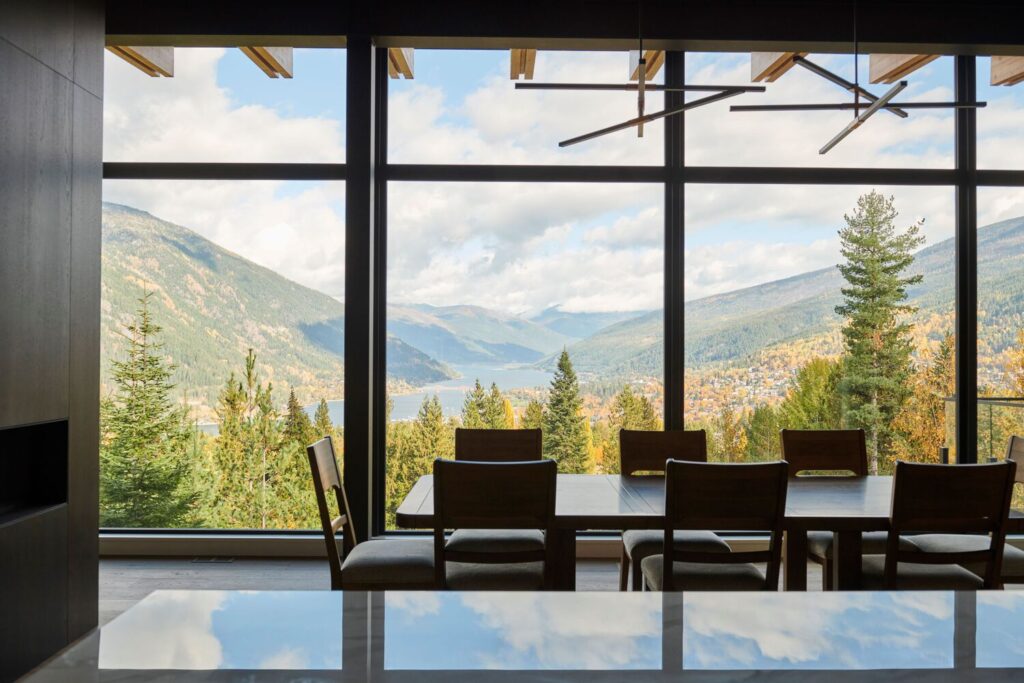
The Kootenay region is a land of giants: towering snowy peaks, plunging valleys, and densely forested slopes. It’s the kind of epic landscape that inspires awe but also presents a serious architectural puzzle. Eagle House sits on one such steep, north-facing slope, boasting commanding views over Kootenay Lake to the craggy peaks of Kokanee Glacier. The challenge? The very mountains that provide the view also block the sun, making precious daylight a key design driver, especially during the low winter sun’s traverse across the southern sky.
A Structure Built for Light
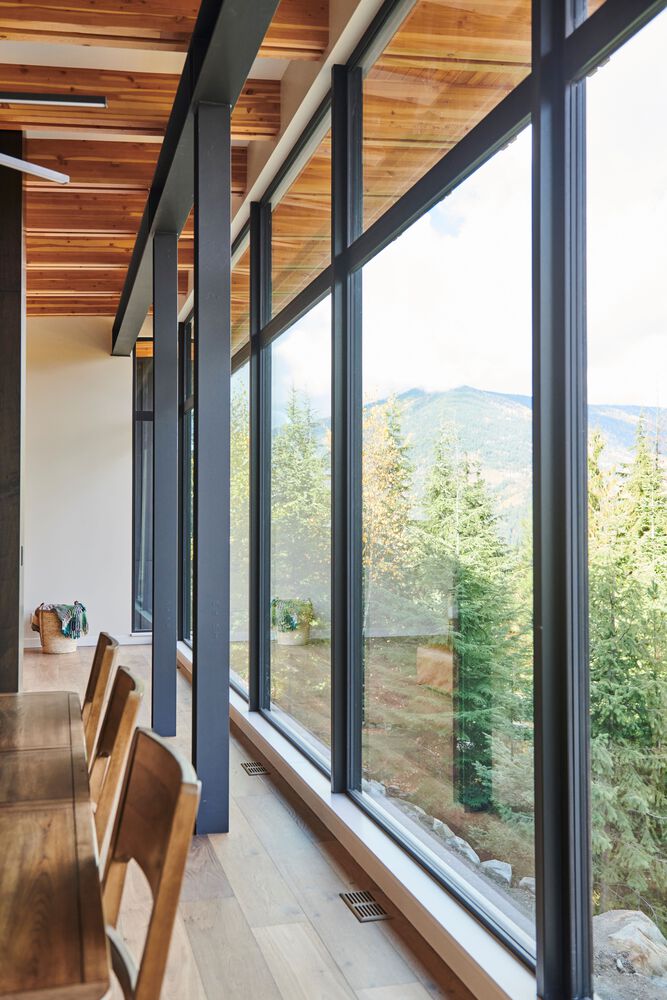
The core genius of Eagle House lies in resolving the tension between the northern view and the southern light. Stanley Office of Architecture tackled this with an elegant solution: the home is, in essence, a house of skylights. This architectural wizardry ensures that at any given moment, sunlight paints its way through the main living spaces. This ever-shifting natural light beautifully highlights the warmth of the wood detailing on the floors, ceilings, and bespoke millwork, creating a dynamic and inviting interior.
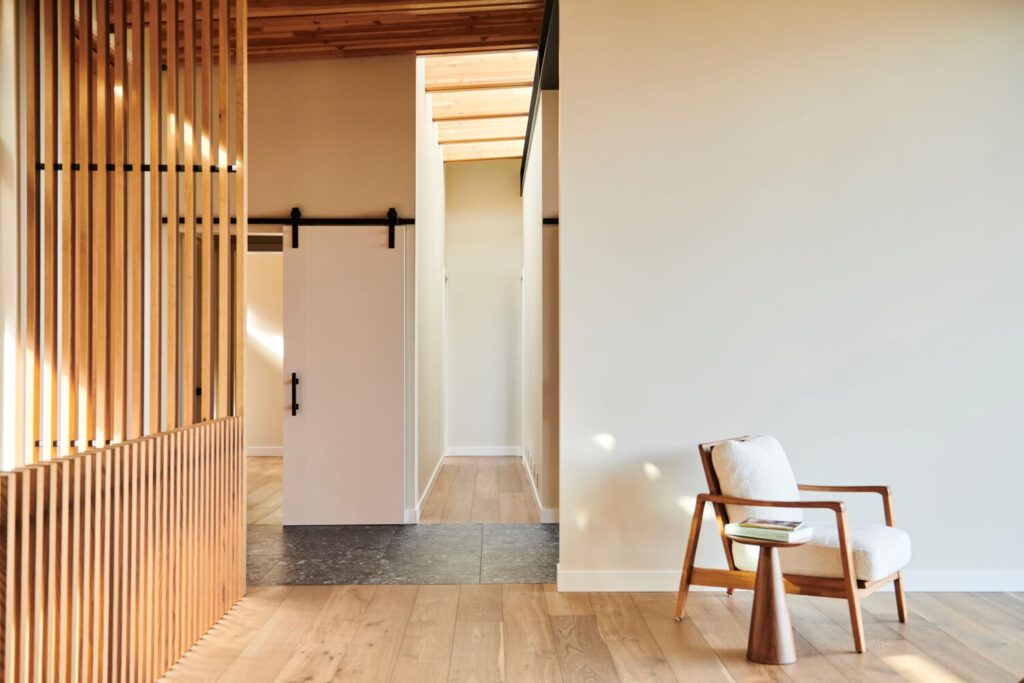
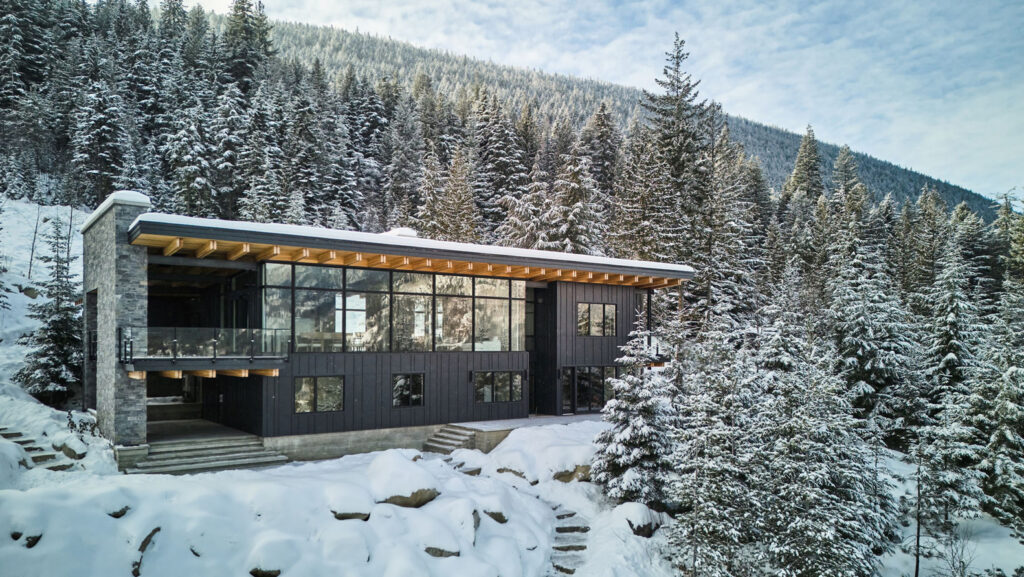
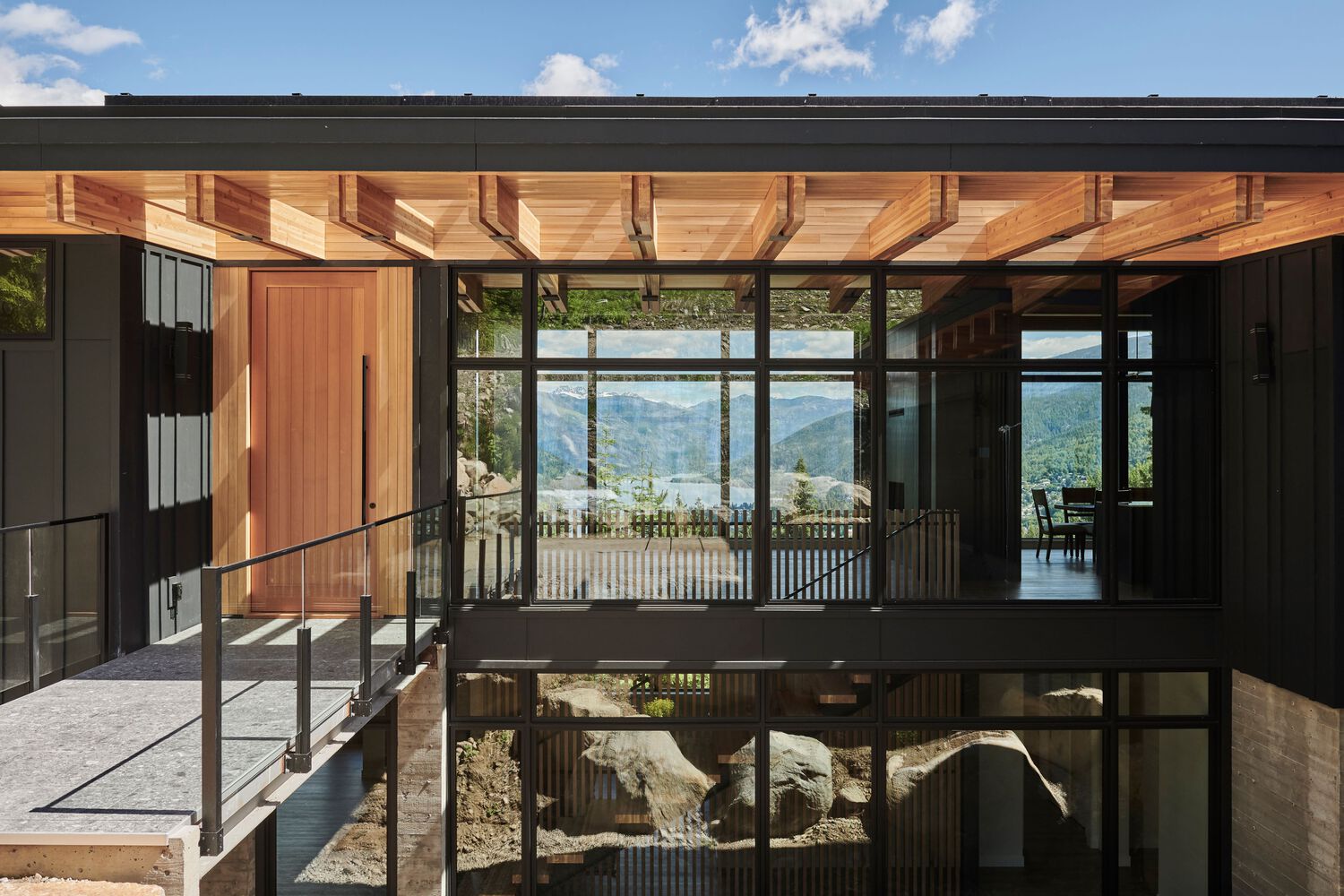
To achieve this flood of light and frame the epic vistas, the architects employed a clever structural system. A grid of steel posts and beams supports doubled-up glulam rafters, allowing for vast window walls that face the northward view without compromising structural integrity. This combination of steel and glass lends the home a tangible sense of lightness and transparency, making you feel suspended within the epic landscape itself.
Materials Rooted in the Mountains
The material palette is a masterclass in restraint, deferring to the natural beauty of the site. The exterior walls, clad in near-black fibre cement, allow the structure to recede into the shadowy forest backdrop, creating a subtle yet powerful presence. The soaring roof is a celebration of local timber, crafted from striking Douglas fir rafters and hemlock soffits. Even the foundation pays homage to the forest, with board-formed concrete that bears the distinct imprint of the wood used to cast it.
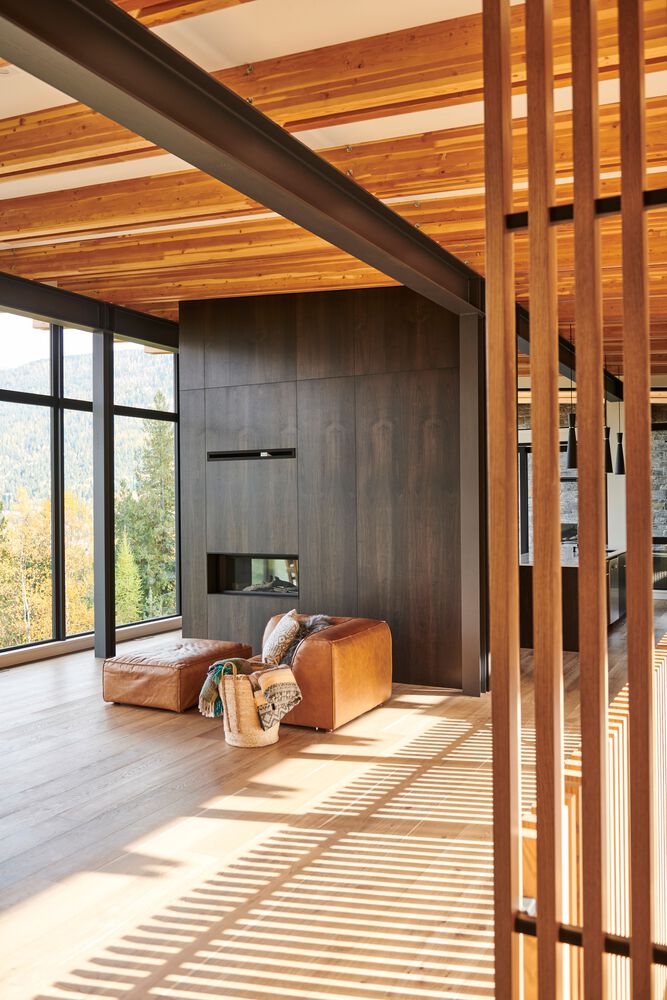
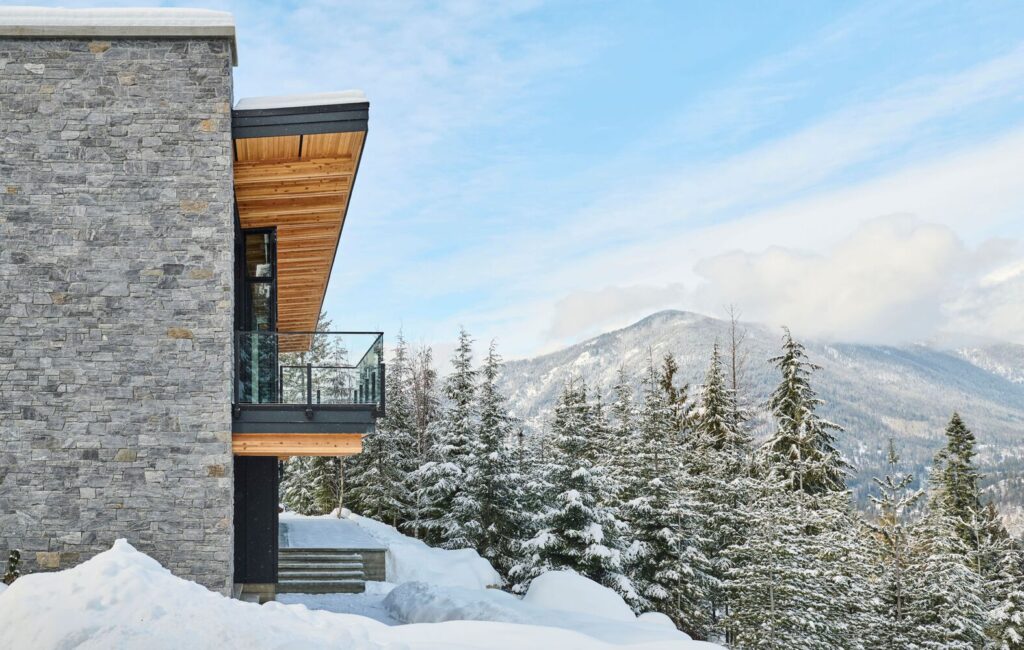
Grounding the eastern end of the home is a magnificent outdoor stove and chimney, wrapped in stone that directly alludes to the rugged cliffs of the nearby Selkirk Mountains. It’s this masterful blend of materials—the ‘lightness’ of steel and glass collaborating with the earthy, grounding force of wood and masonry—that gives Eagle House its unique and compelling character.
A Seamless Indoor-Outdoor Connection
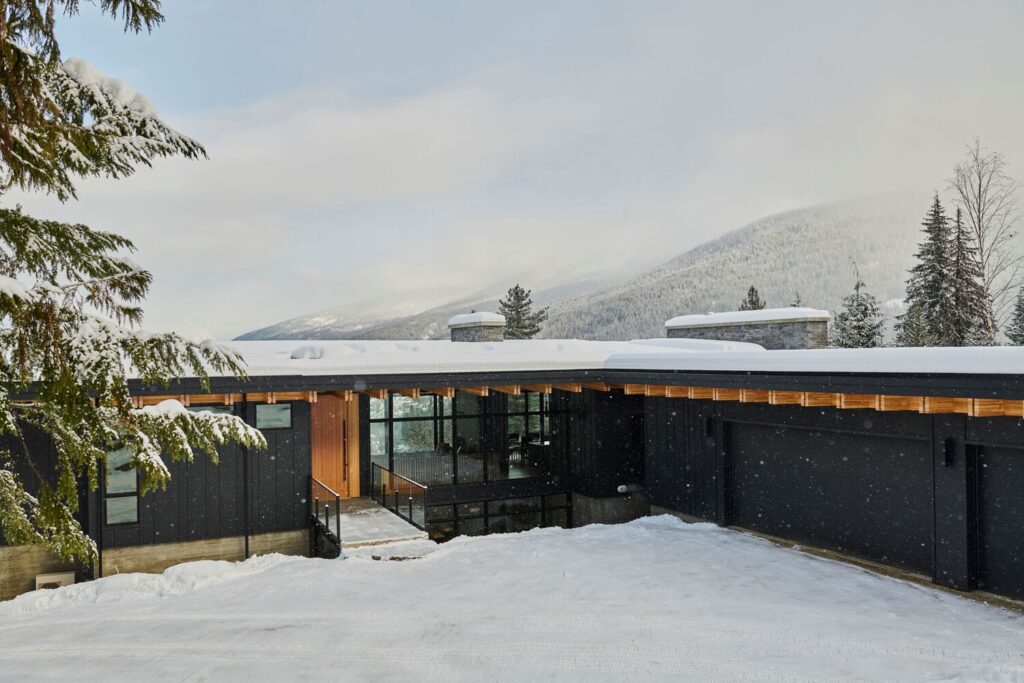
The journey to the house is as considered as the home itself. An access drive winds through a stand of conifers, leading to a footbridge that guides you towards a dramatic two-story glass entrance wall. Here, a solid Douglas fir pivot door swings open, and the first thing you see is a perfectly framed, deliberate view of Nelson’s iconic “Big Orange Bridge” with the breathtaking Kokanee Glacier forming the ultimate backdrop.
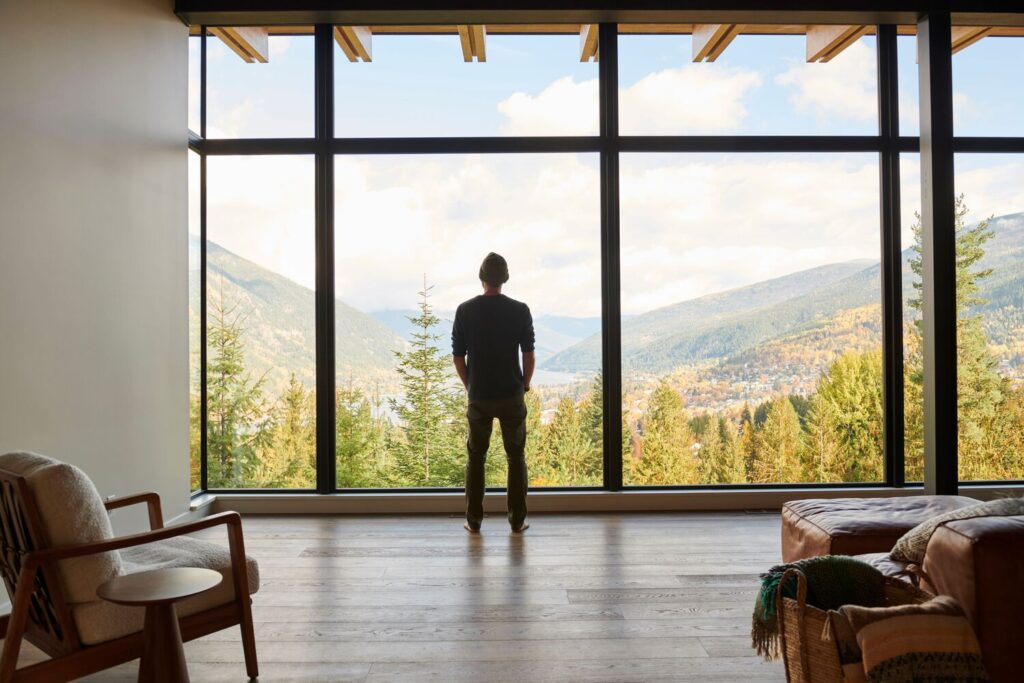
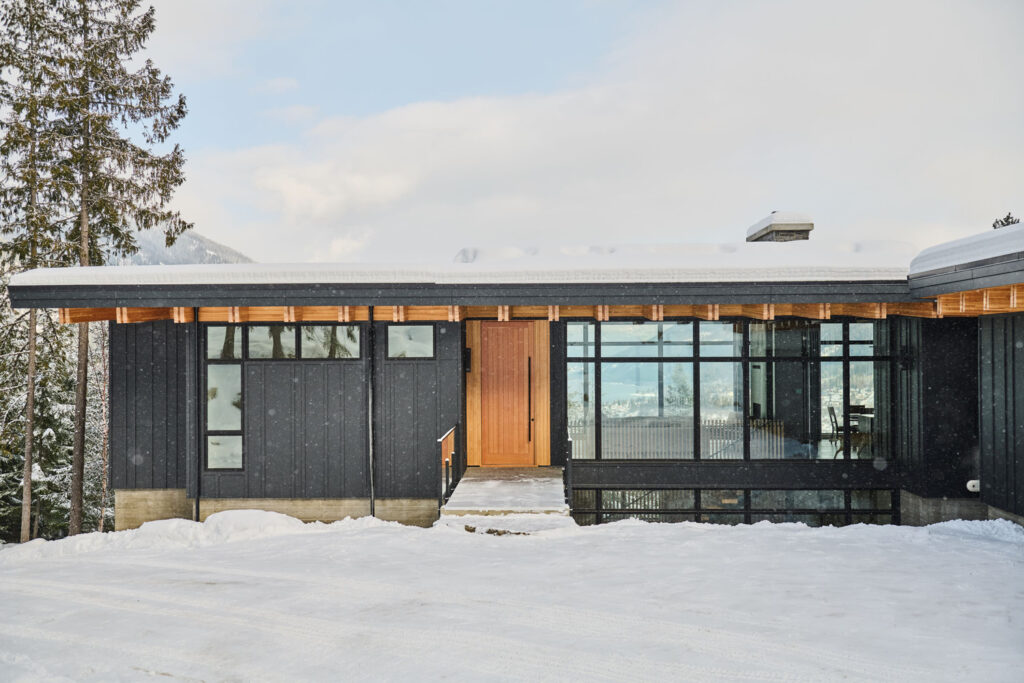
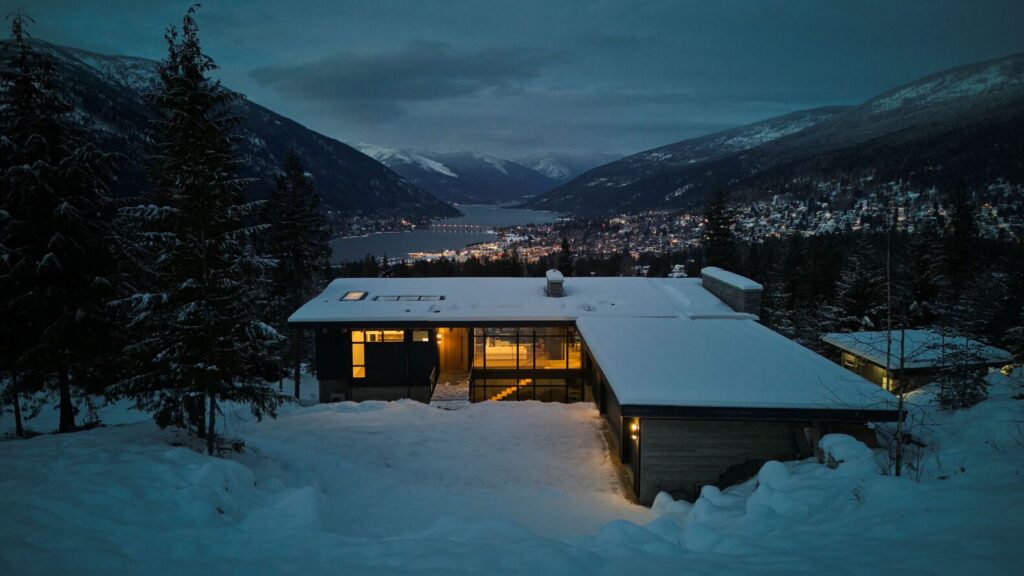
The house is smartly divided into two wings—a private, quiet bedroom wing and a lofty, open-concept living wing—with the entrance acting as the intersection. This thoughtful layout is complemented by an embrace of the outdoors, from extensive patios and decks to a serene forest grove on the north side. Eagle House isn’t just in nature; it’s a house firmly rooted in it. For those who appreciate architecture that responds intelligently and beautifully to its environment, it simply doesn’t get much better than this.