








There is something undeniably primal about the desire to retreat to the woods, to find a high point in the landscape, and to simply watch the world go by. It is a drive that architecture has tried to satisfy for centuries, but rarely does a structure manage to balance the rugged demands of the wilderness with the refined aesthetics of modern design quite like The Nest.
Designed by the Vancouver-based Daria Sheina Studio, this off-grid cabin is not merely a shelter; it is a sculptural observation deck built for the sole purpose of reconnecting with the wild.
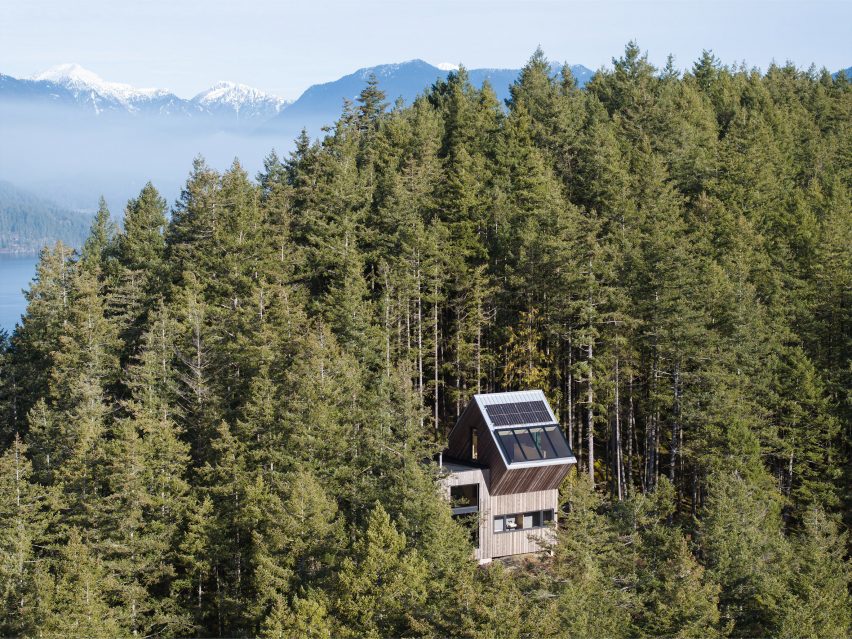
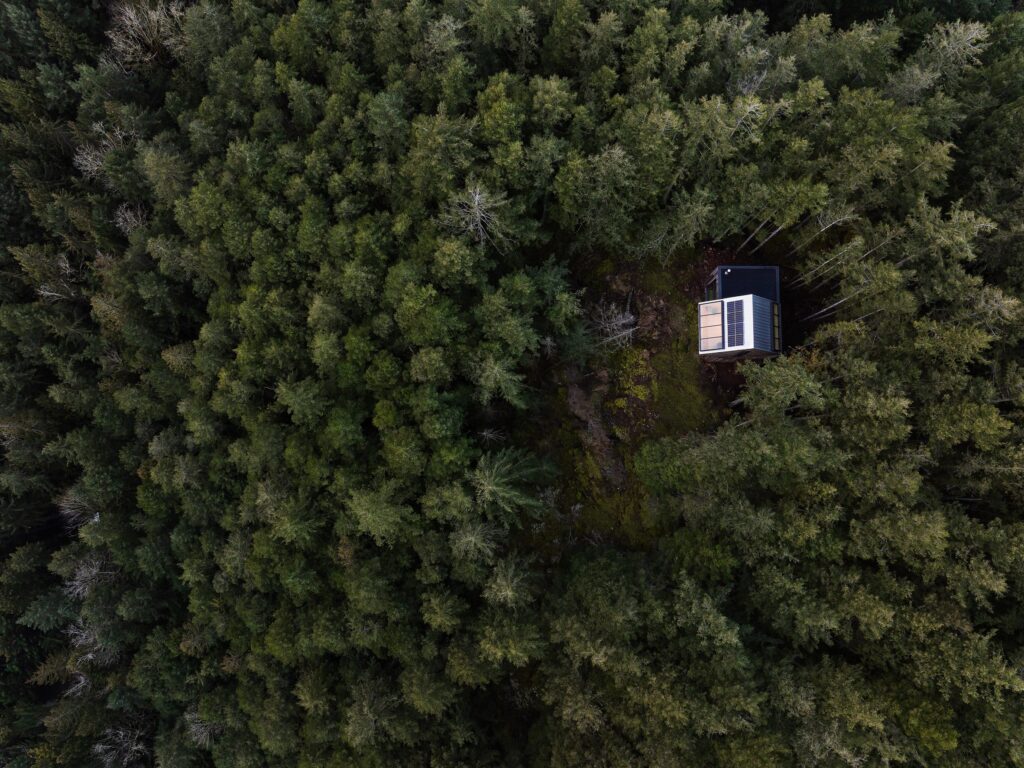
Located on Keats Island, a remote getaway in British Columbia with a population of only 50 full-time residents, The Nest occupies the highest point of a 10-acre site.
The terrain here is unforgiving and beautiful, characterized by moss-covered bedrock and a dense canopy of evergreens.
Rather than flattening the landscape to accommodate the home, the architects designed the structure to peek out from the rugged terrain, creating a silhouette that feels both alien and entirely organic to its surroundings.
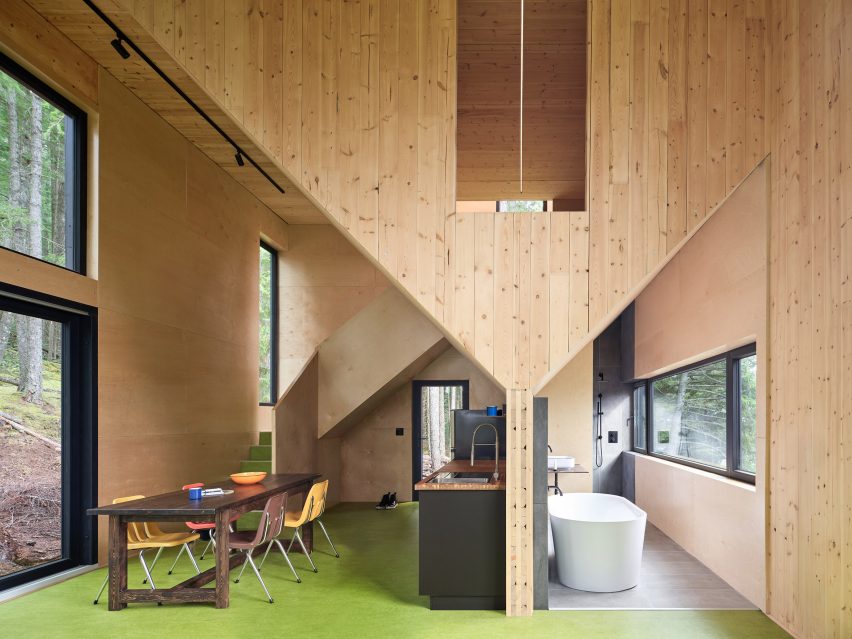
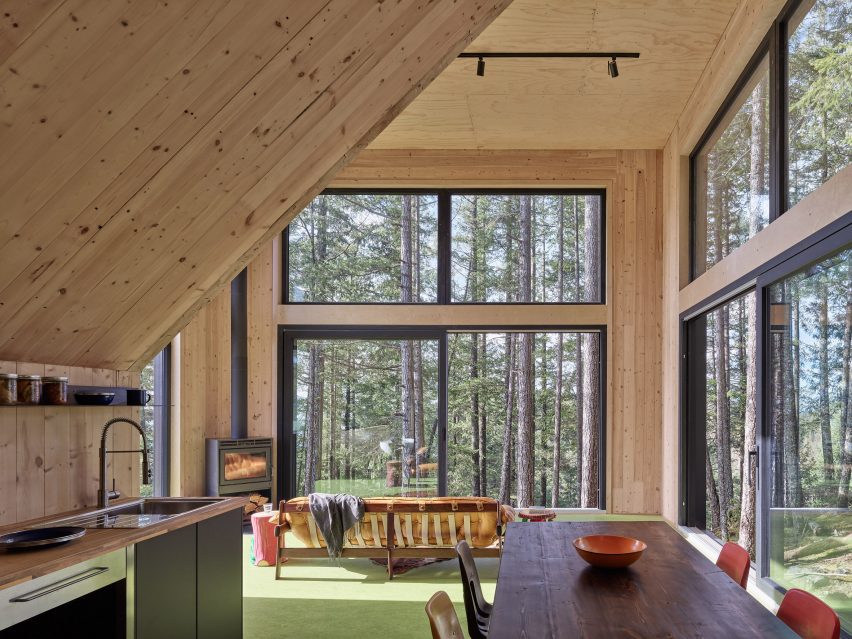
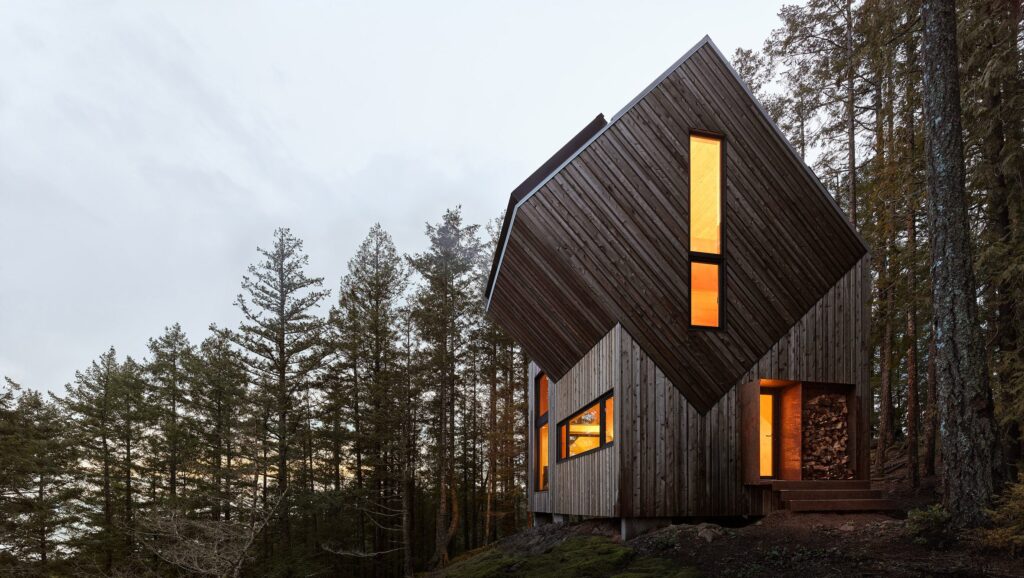
The architecture itself is a fascinating exercise in geometry and perspective. The home comprises 1,063 square feet of living space, but it is the arrangement of that space that captures the imagination. Constructed from mass timber, the ground level is a grounded rectangular volume housing the communal areas—the kitchen, dining, and living room.
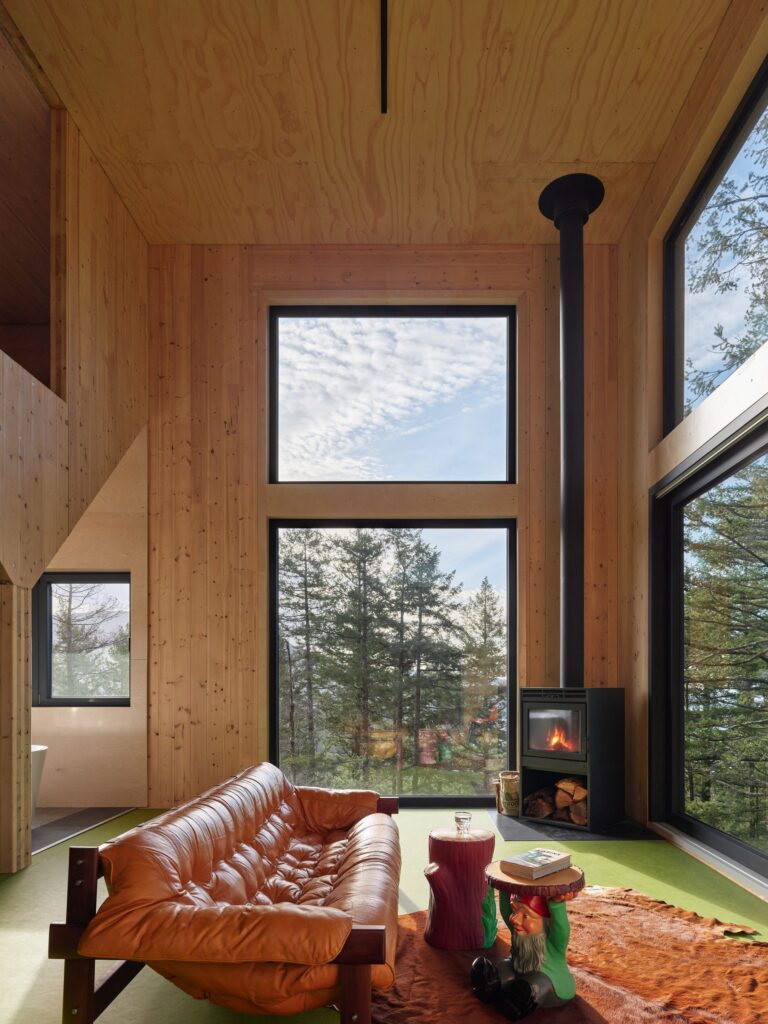
It is here that the connection to the earth is felt most strongly, with lift-and-slide doors that erase the boundary between the interior and the forest floor.
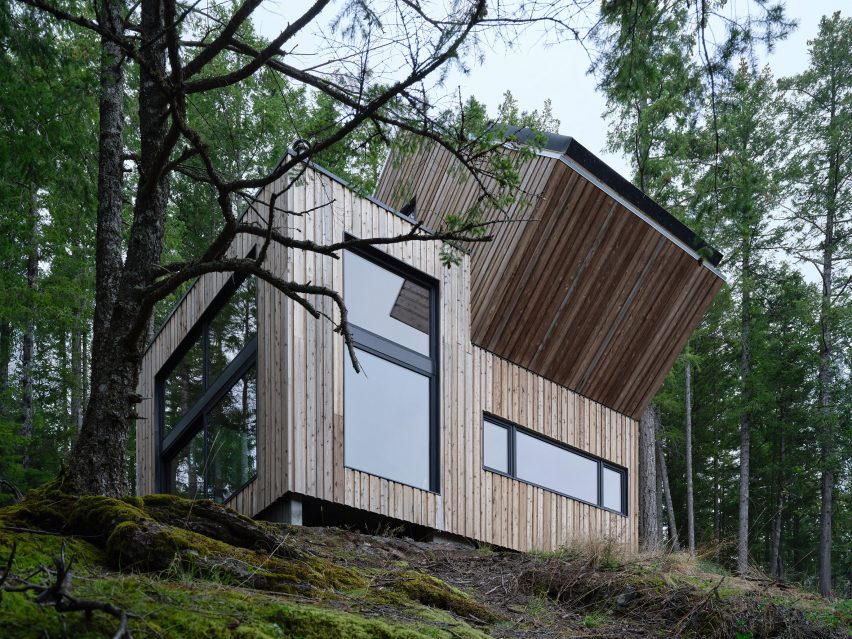
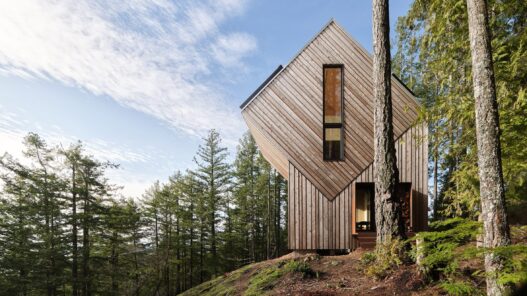
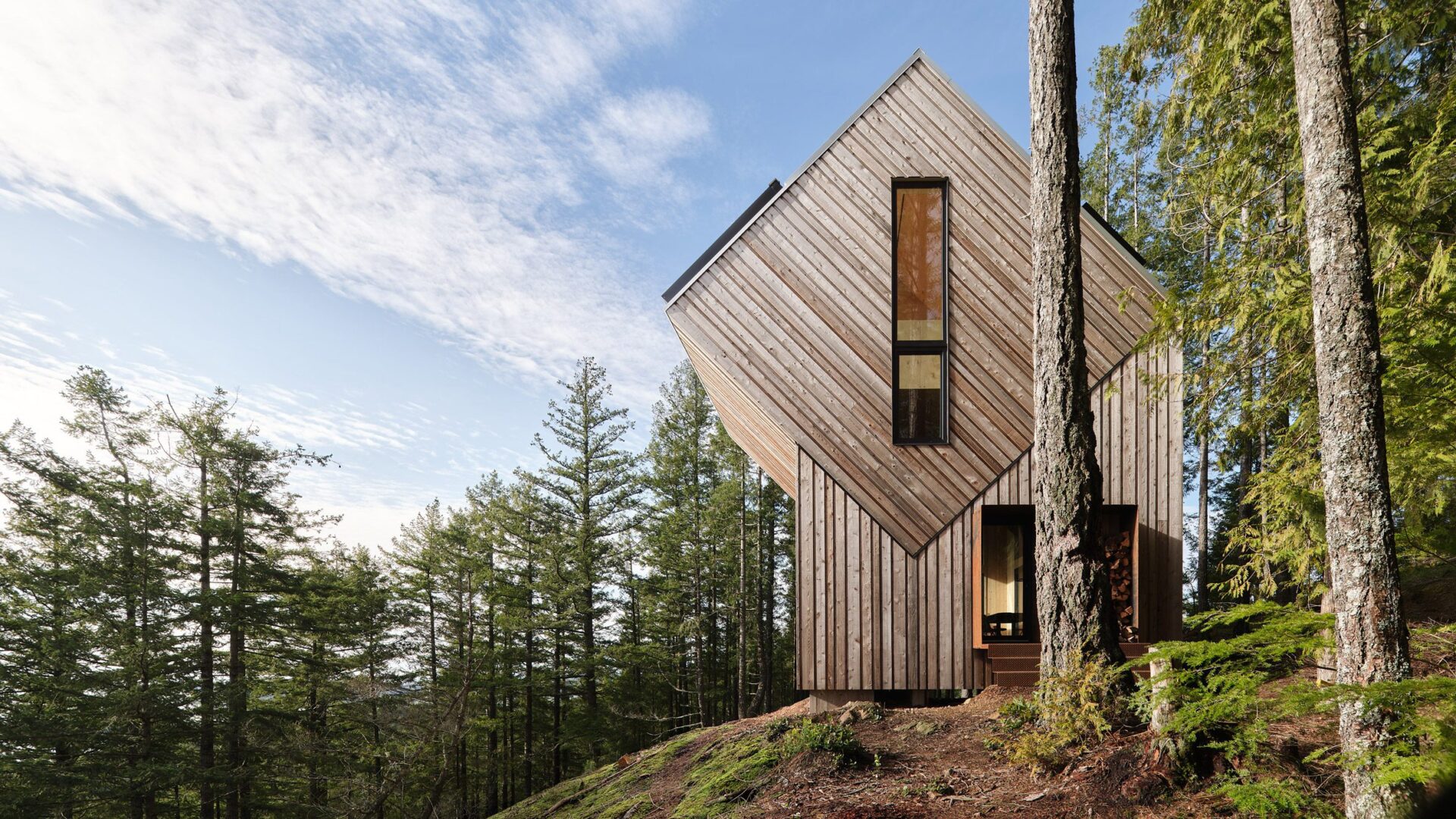
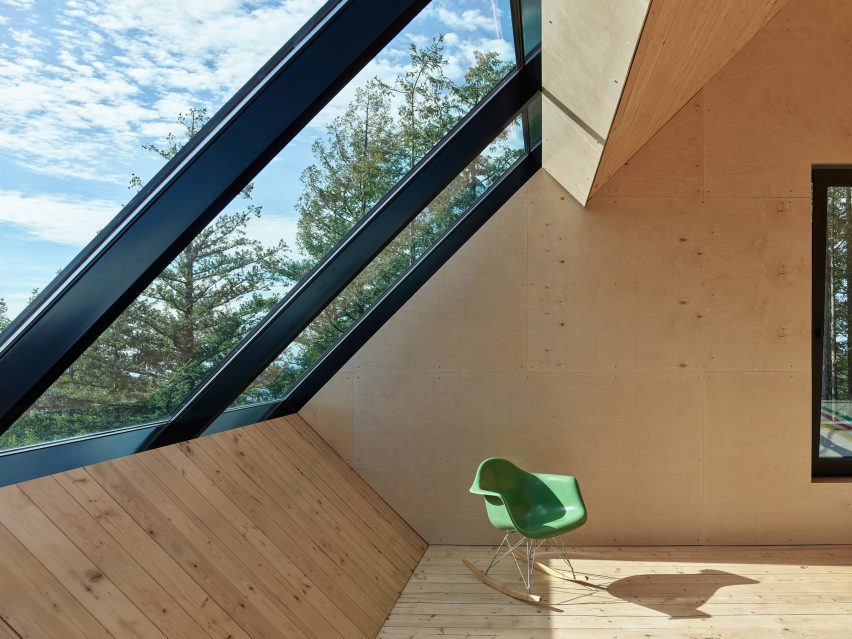
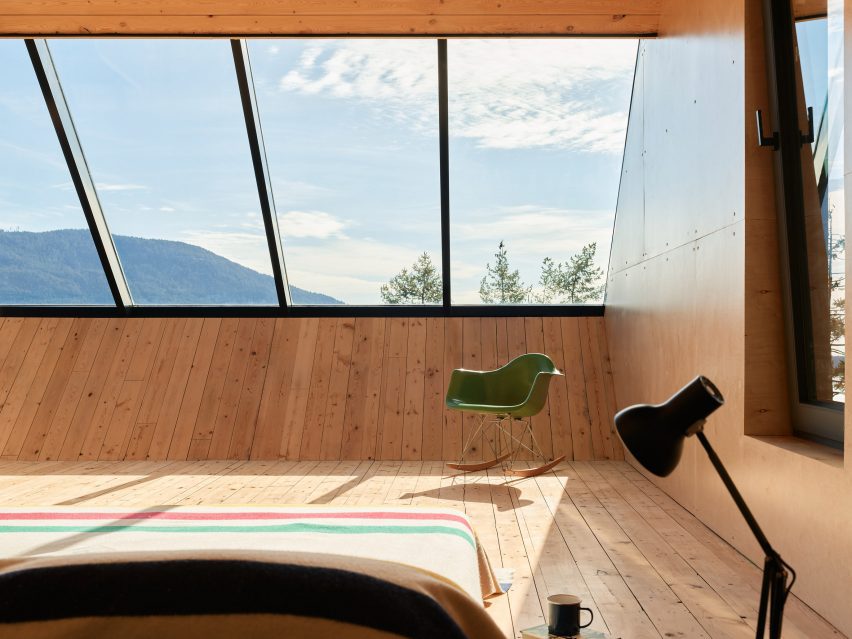
However, as your eye travels upward, the design takes a dramatic turn. The third-floor bedroom volume has been rotated 90 degrees horizontally and 45 degrees vertically, sitting under a pitched roof as if tipped on its corner.
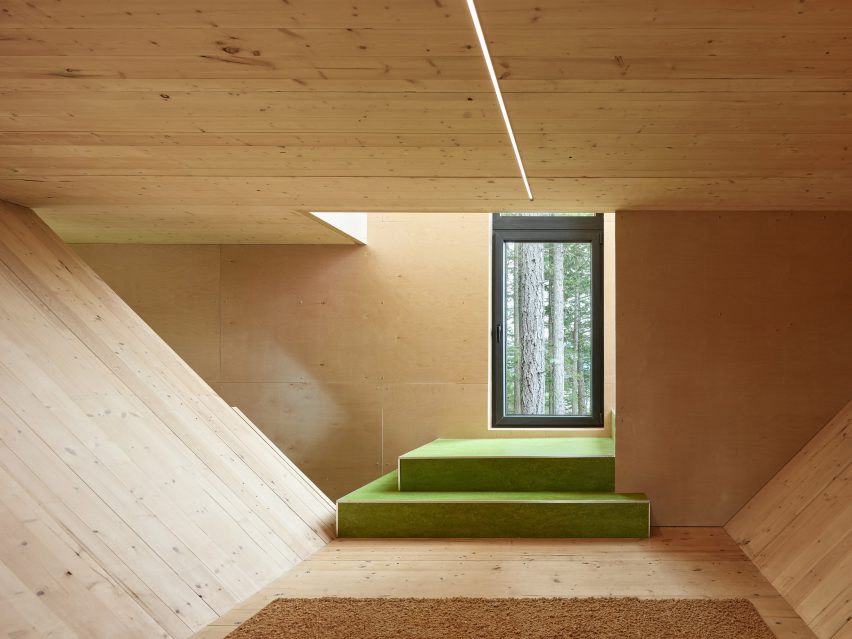
This architectural twist creates a unique intermediate second level—a small lounge with outward-sloping walls that offers a voyeuristic view of the public areas below while directing the gaze outward toward the horizon.
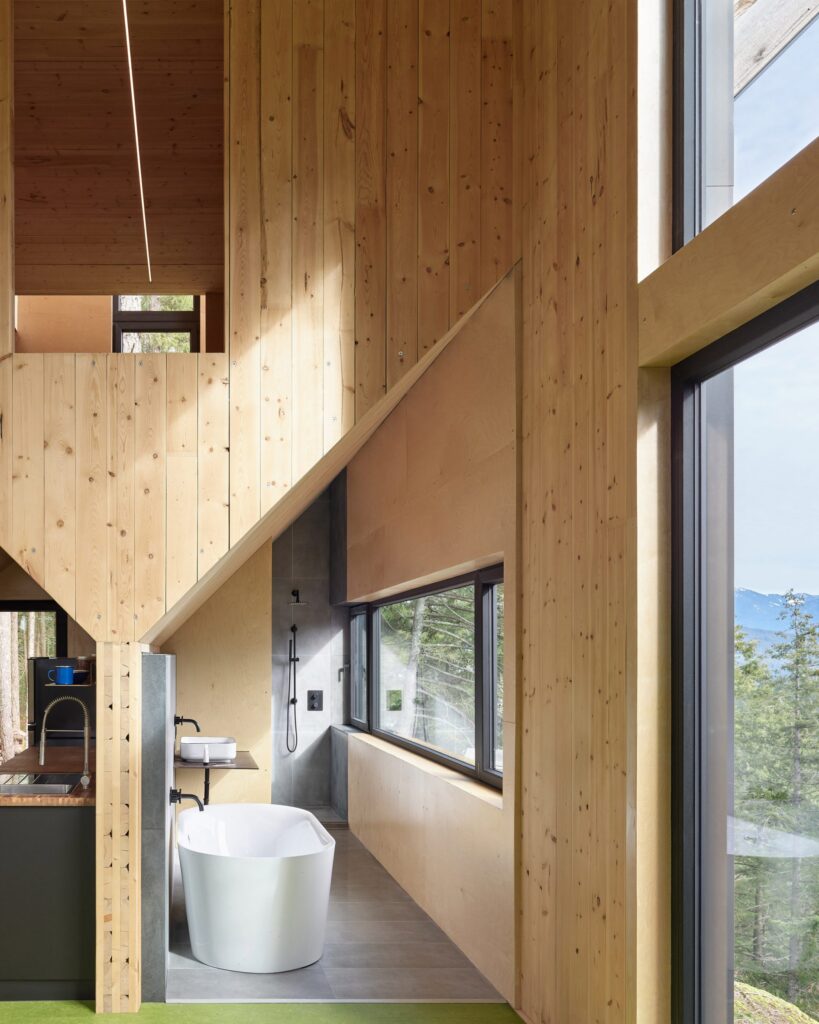
This rotation isn’t just for show; it is a strategic move to capture the stunning panoramic views of the Howe Sound. Bands of windows flank the slanted roof, framing the ocean and trees like living artwork.
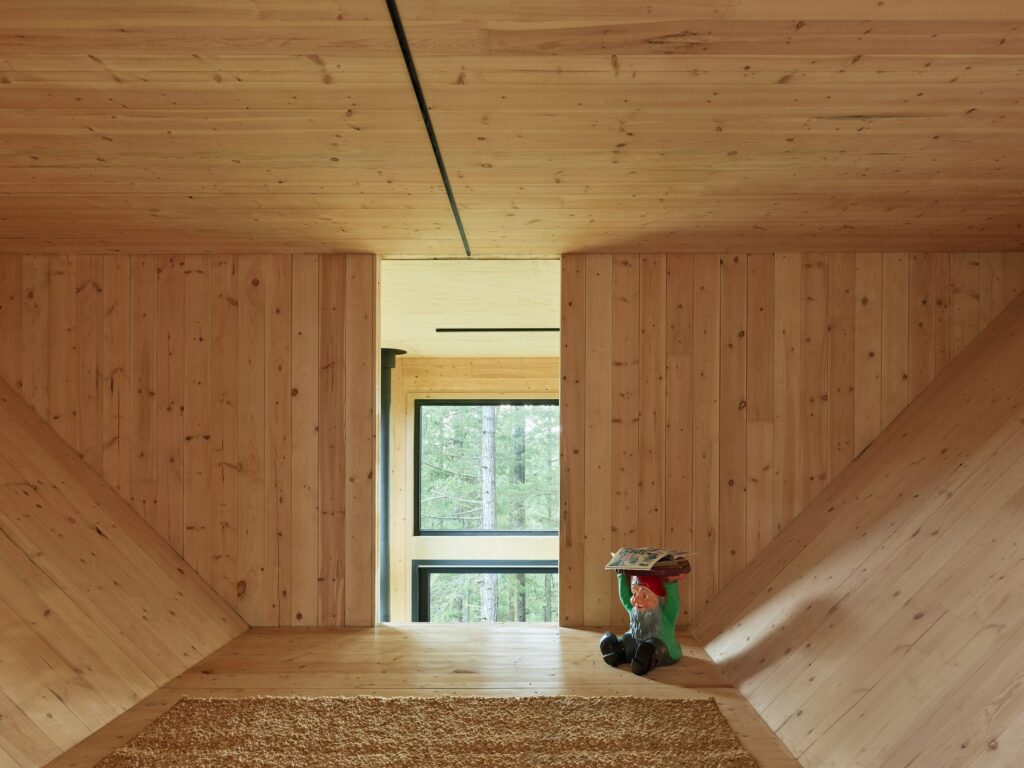
The exterior is clad in western red cedar, a material choice that ensures the “merged forms” of the house will weather and gray over time, eventually blending seamlessly into the surrounding forest.
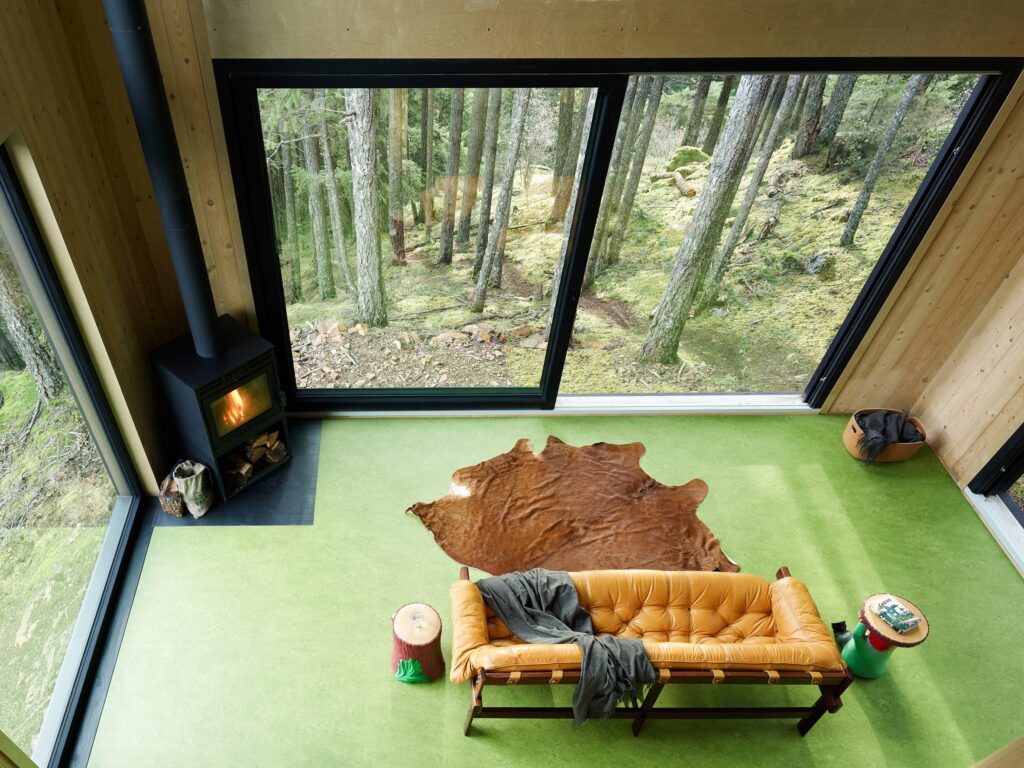
Inside, the aesthetic is strictly minimalist, combining exposed wood with green marmoleum flooring that visually pulls the mossy hues of the bedrock into the living space.
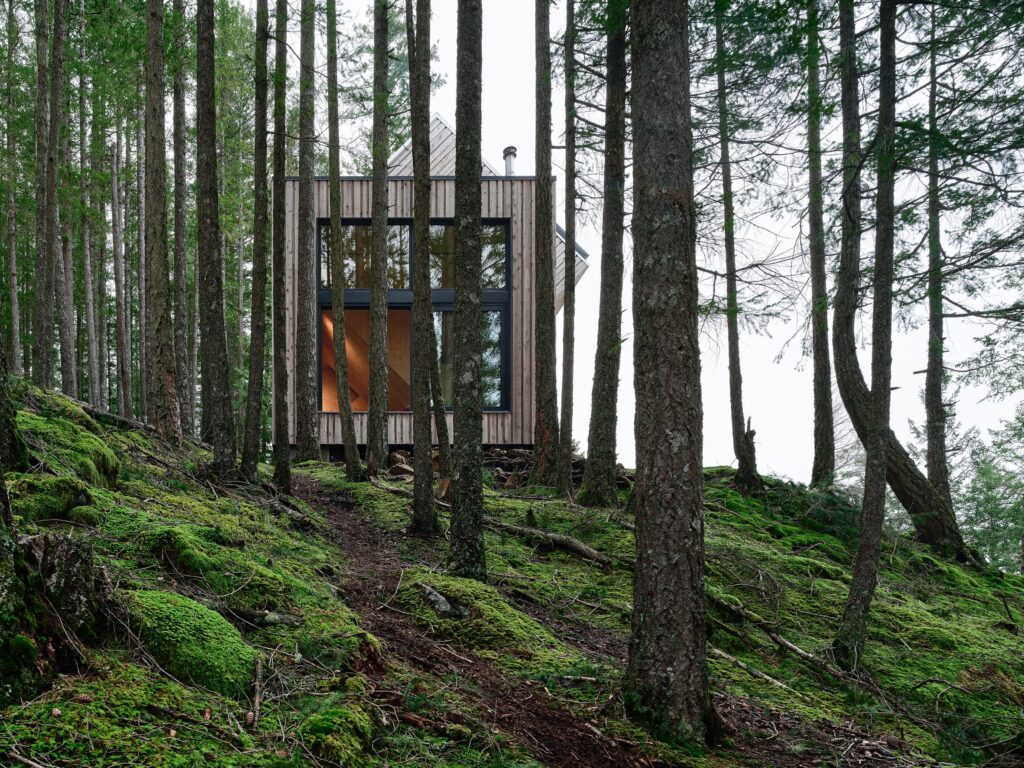
Building The Nest was no small feat of engineering. Because the site is largely inaccessible, Daria Sheina Studio collaborated with BC Passive House to prefabricate the mass timber components.
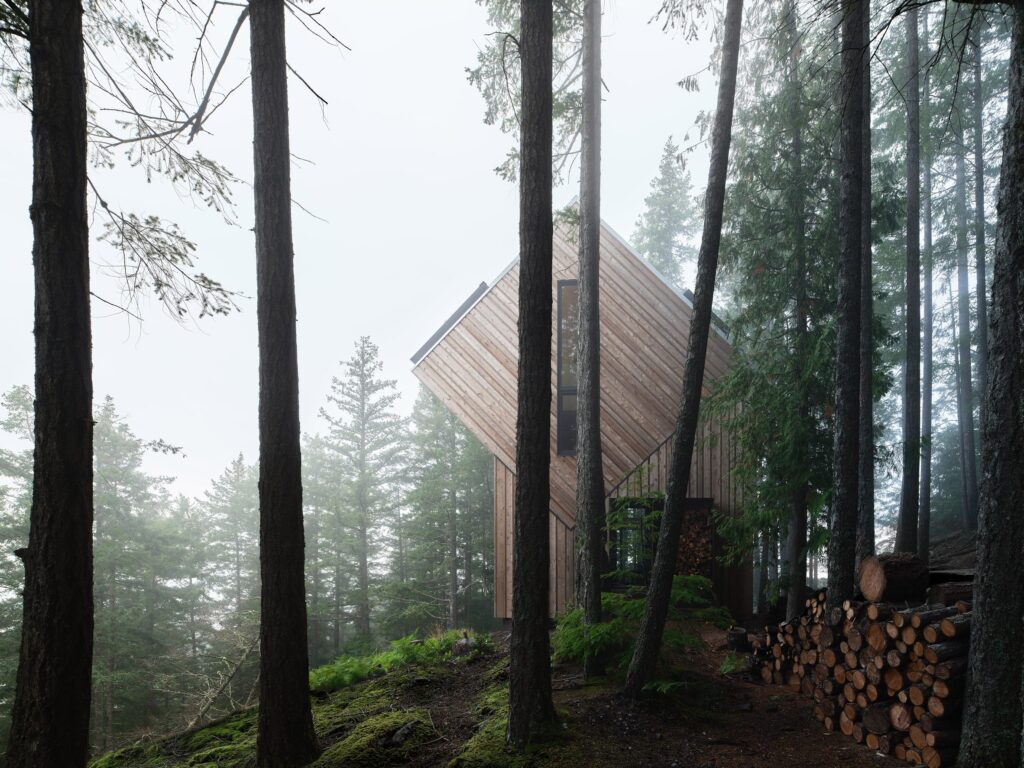
These were then airlifted by helicopter to the site—a dramatic delivery for a dramatic home. This method not only solved the logistical nightmare of transport but also minimized the construction impact on the delicate ecosystem.
True to its remote location, The Nest is a fully self-sufficient ecosystem. It operates entirely on solar power via a roof-mounted array and features a rainwater filtration system and an incinerating toilet.
It is a model of how thoughtful design can forge profound connections between people and place, proving that living off-grid doesn’t mean sacrificing style. It is a place to unwind, to watch the weather roll in over the sound, and to live, quite literally, at a different angle.