










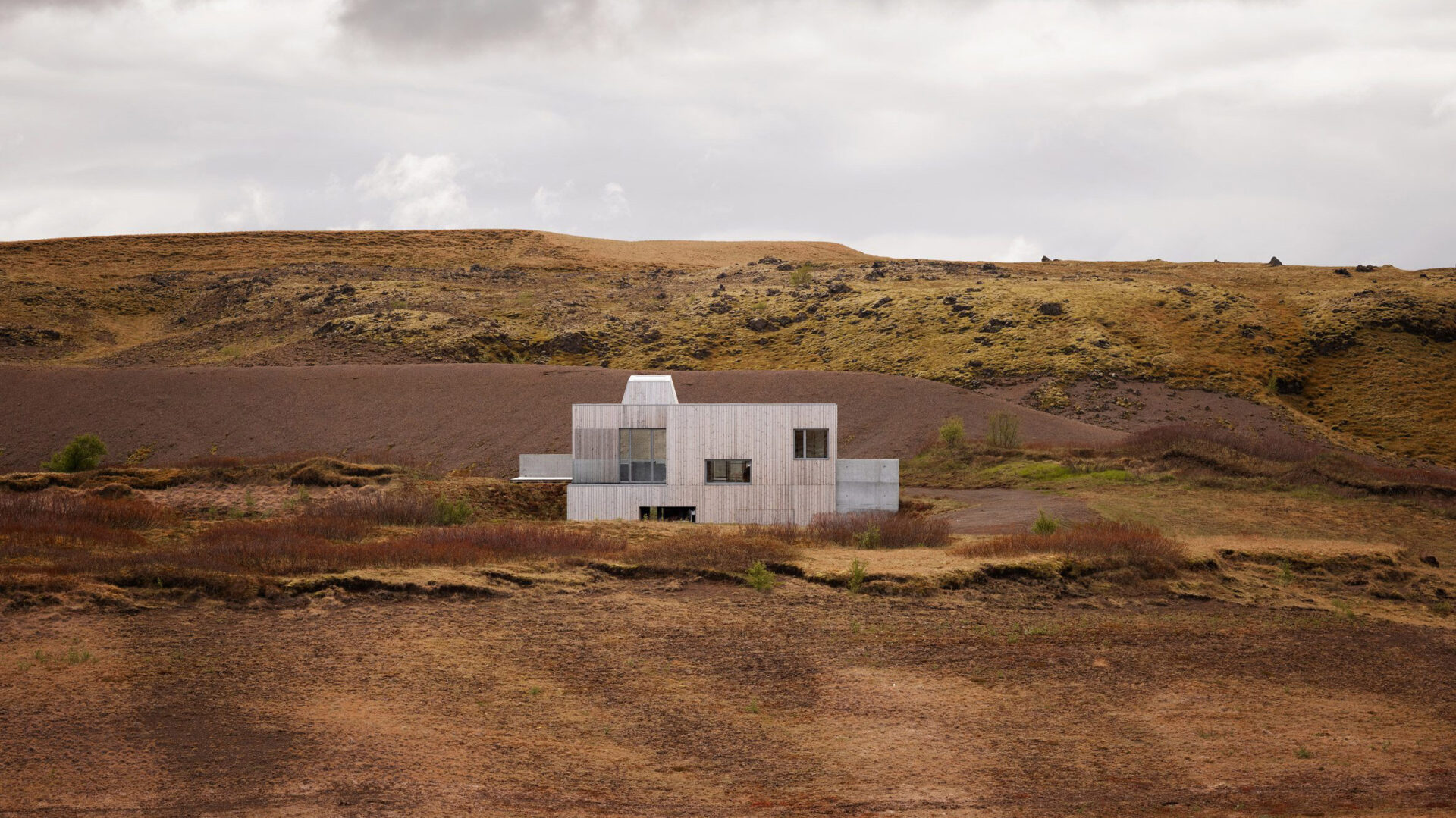
There is a particular brand of architectural bravery required to build a home in the shadow of an active volcano. Most of us look for a southern aspect or a view of the sea when choosing a site, but in Iceland, the landscape demands a different kind of engagement. It requires a design that acknowledges the raw, primal power of the earth beneath it.
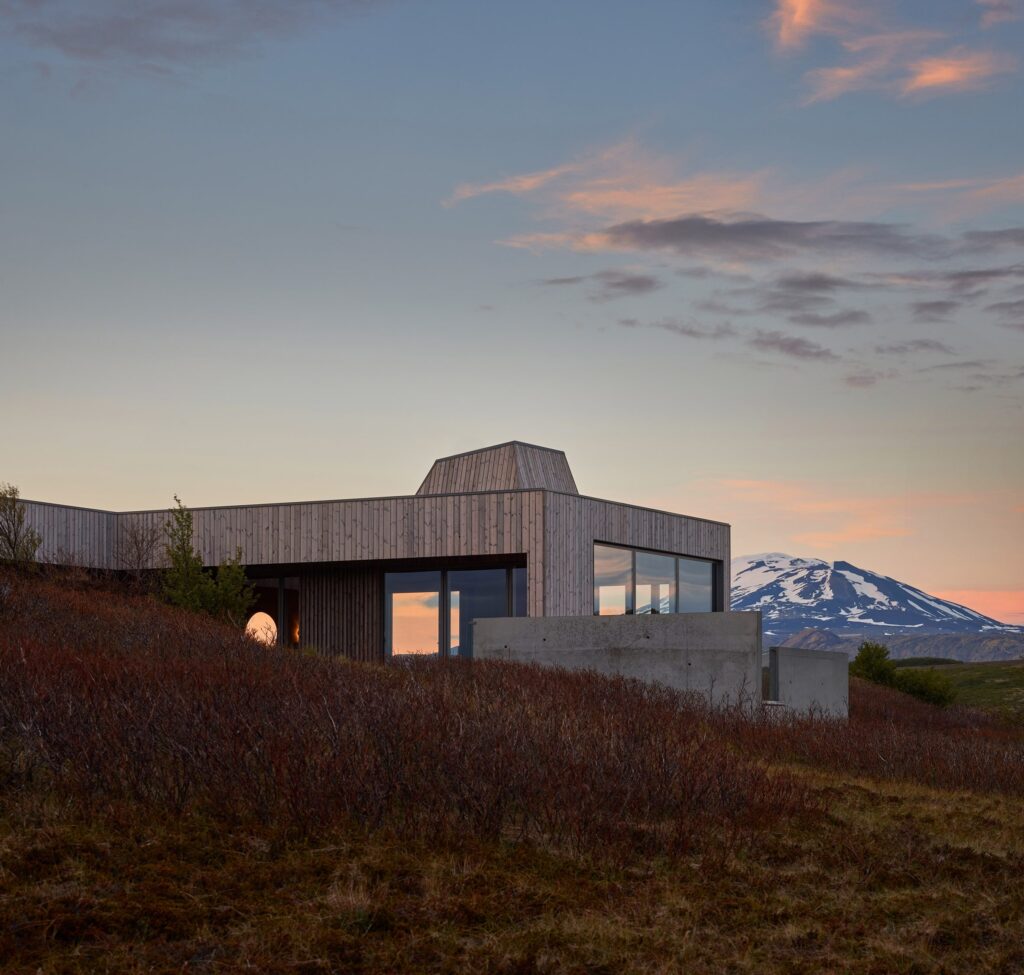
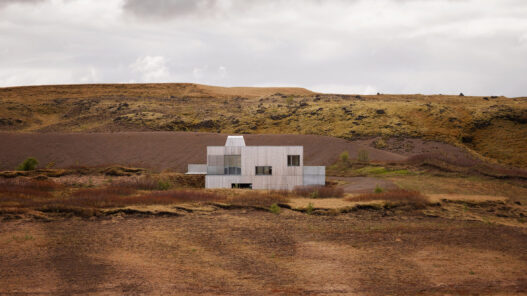
This is precisely the ethos behind Swan Nest, a striking summerhouse designed by local studio Yrki Arkitektar. Located on a rolling green site that stares down the barrel of Hekla, one of Iceland’s most active stratovolcanoes, this is not just a dwelling; it is a front-row seat to the geological drama of the North Atlantic.
The project is deeply personal, designed for the family of the studio’s founder, Ásdís Helga Ágústsdóttir. Perhaps because of this intimate connection, the house feels less like a structure placed upon the land and more like an element that has emerged from it.
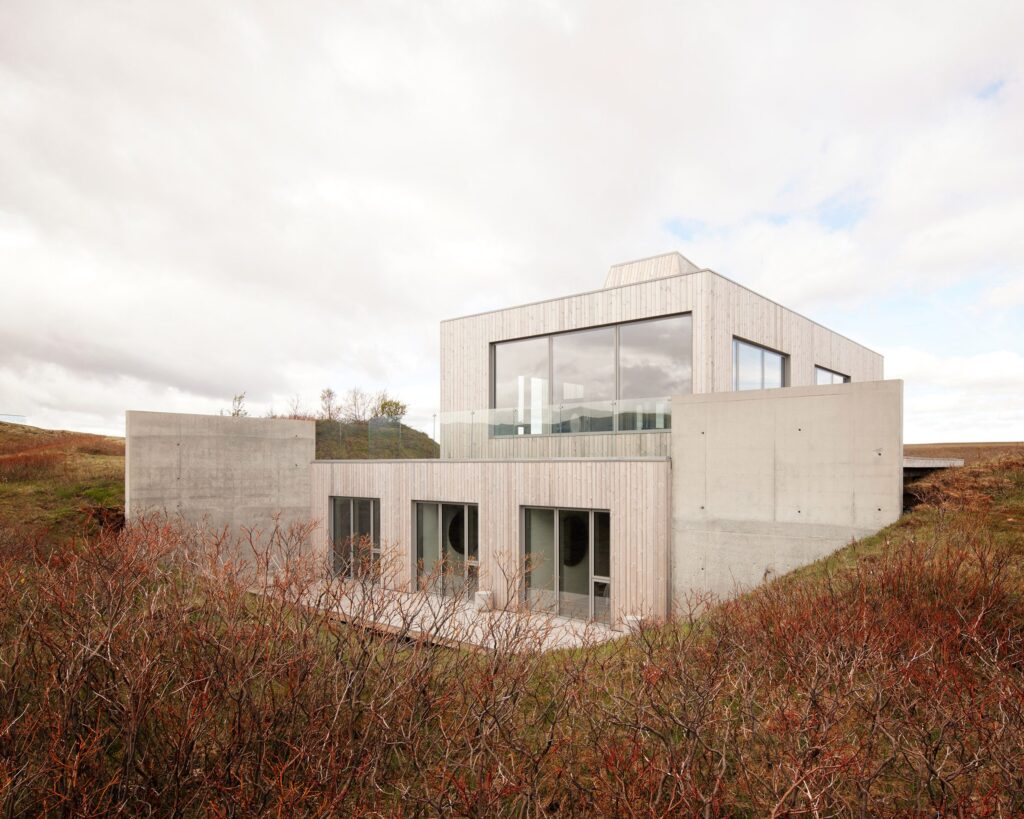
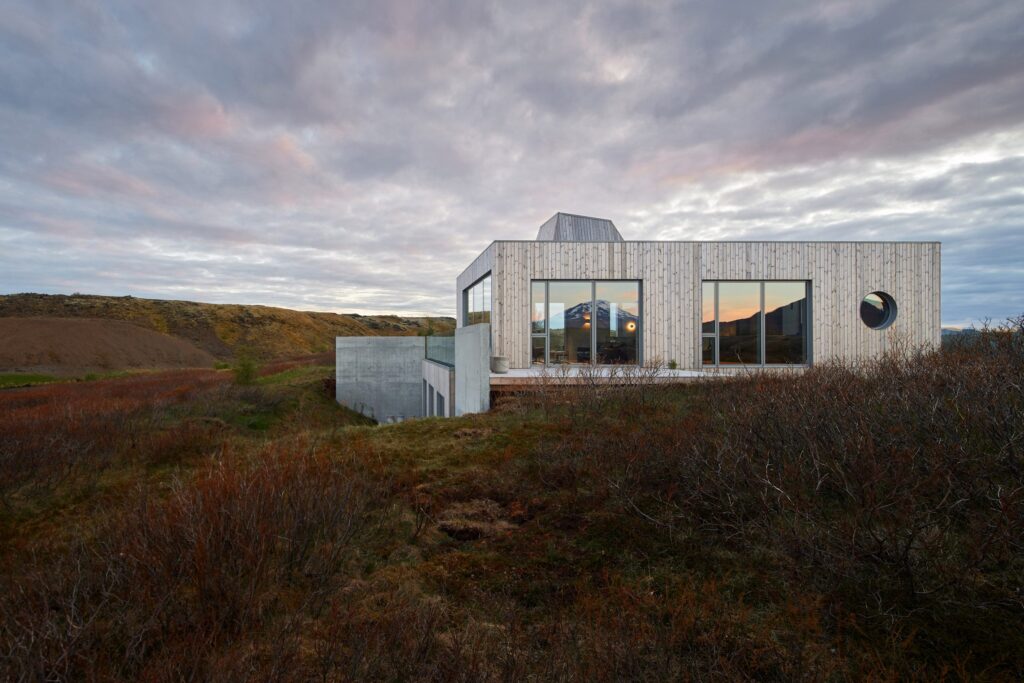
The design team made the conscious decision to embed the home into the terrain, partially sinking the structure to anchor it against the elements.
A cubic timber-clad form is sandwiched between two massive retaining walls of exposed concrete, creating a visual solidity that feels necessary in such a wild environment.
To further blur the lines between the built and the natural, the roof has been finished with sod, allowing the house to disappear into the surrounding grassland when viewed from above.
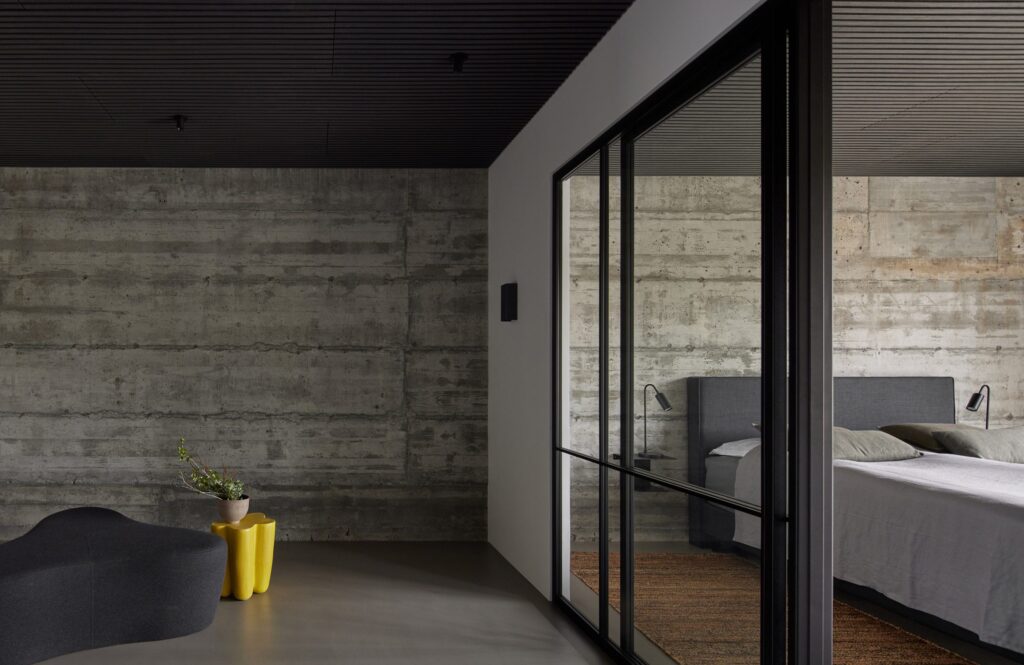
The interior layout is a masterclass in atmospheric zoning. The lower level is dedicated to rest and recovery, housing the main bedroom, bathroom, and a sauna.
By sinking these rooms into the earth, the architects have created a “sanctuary,” a protected, enclosed space that feels safe and womb-like, distinct from the exposure of the wilderness outside. In contrast, the upper floor is an embrace of the horizon.
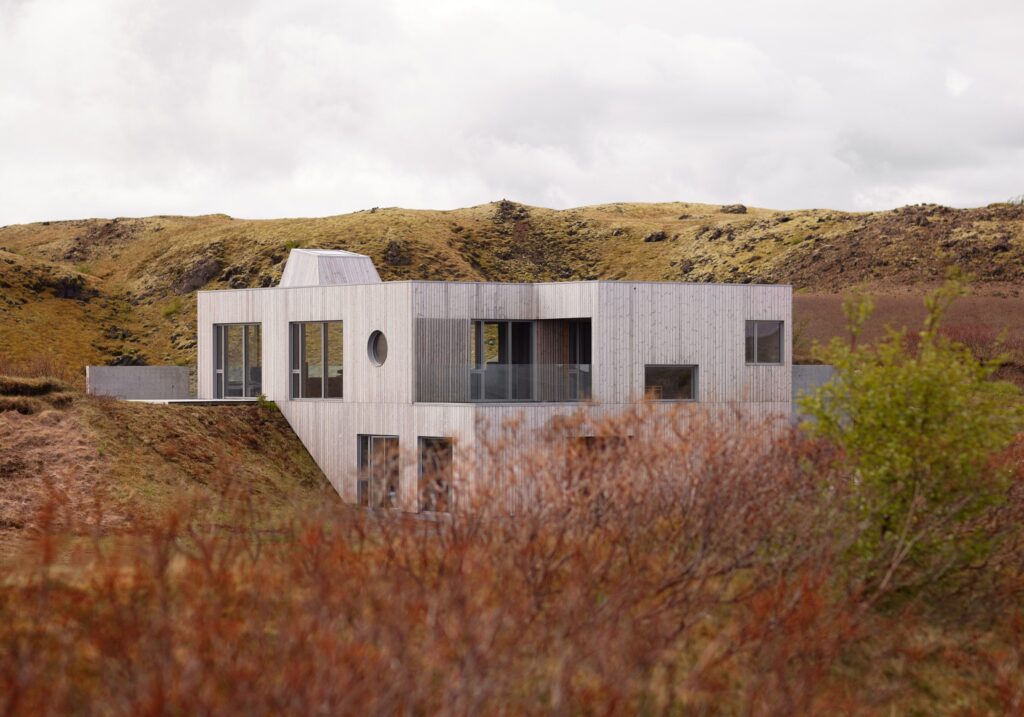
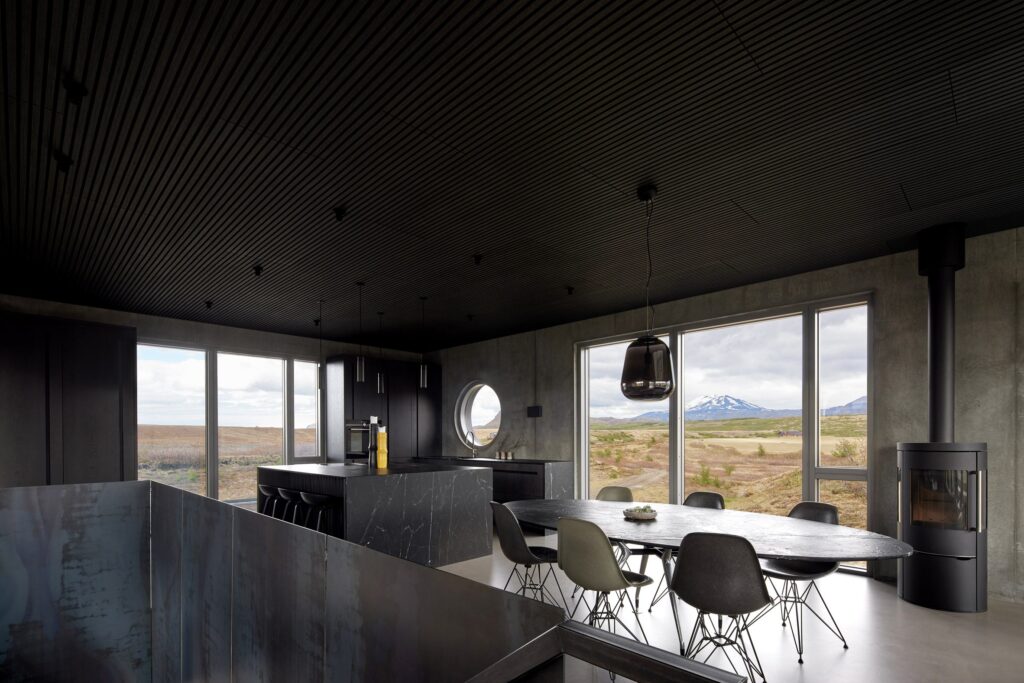
Here, the open-plan living, dining, and kitchen spaces sit alongside an additional bedroom, all wrapped by a continuous timber deck. Large sliding glass doors ensure that the barrier between the warm interior and the crisp Icelandic air can be dissolved in seconds, allowing the residents to step out and engage directly with the landscape.
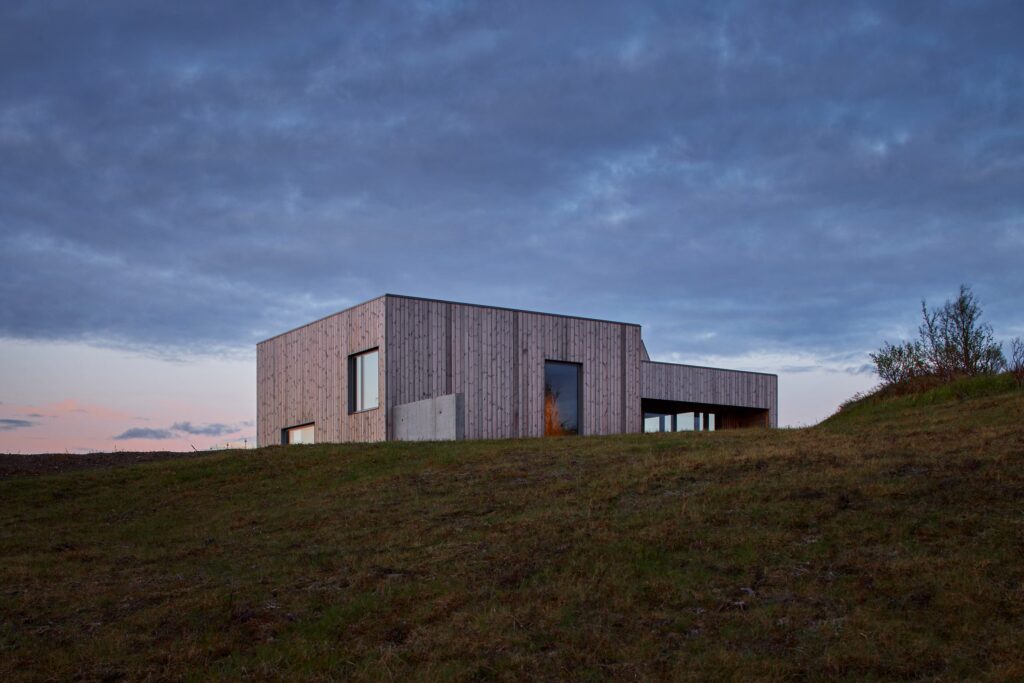
Aesthetically, Swan Nest avoids the cliché of the stark white Scandinavian box. Instead, it mirrors the jagged, darkened beauty of the lava fields that surround it.
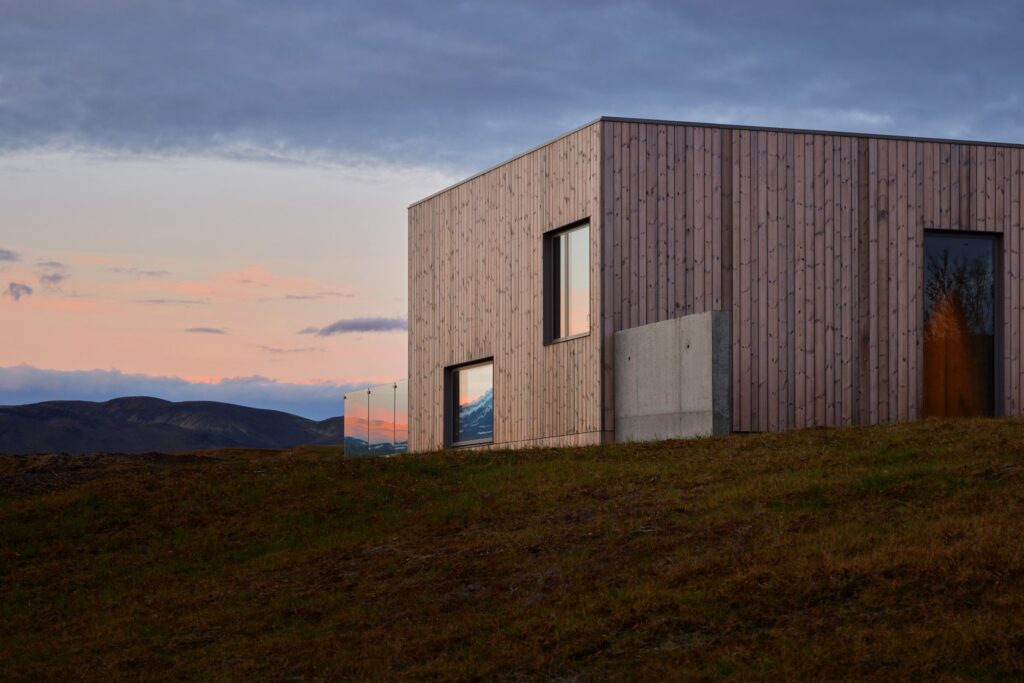
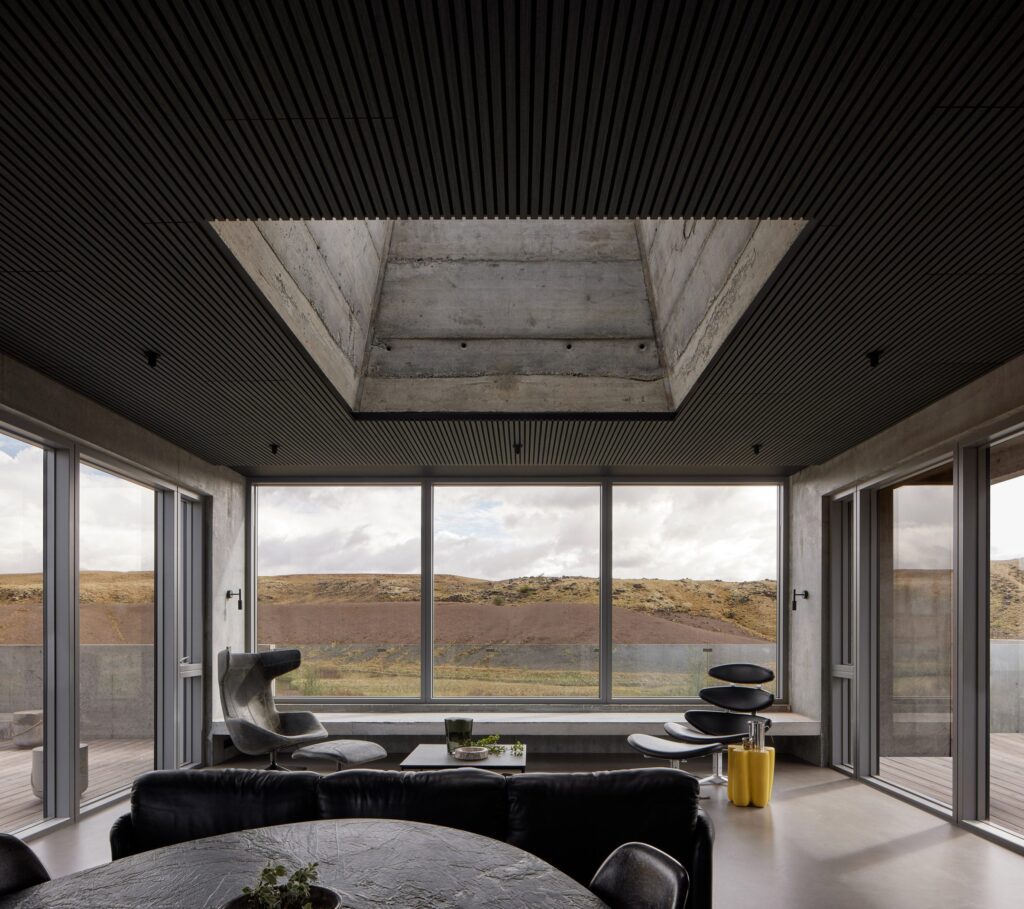
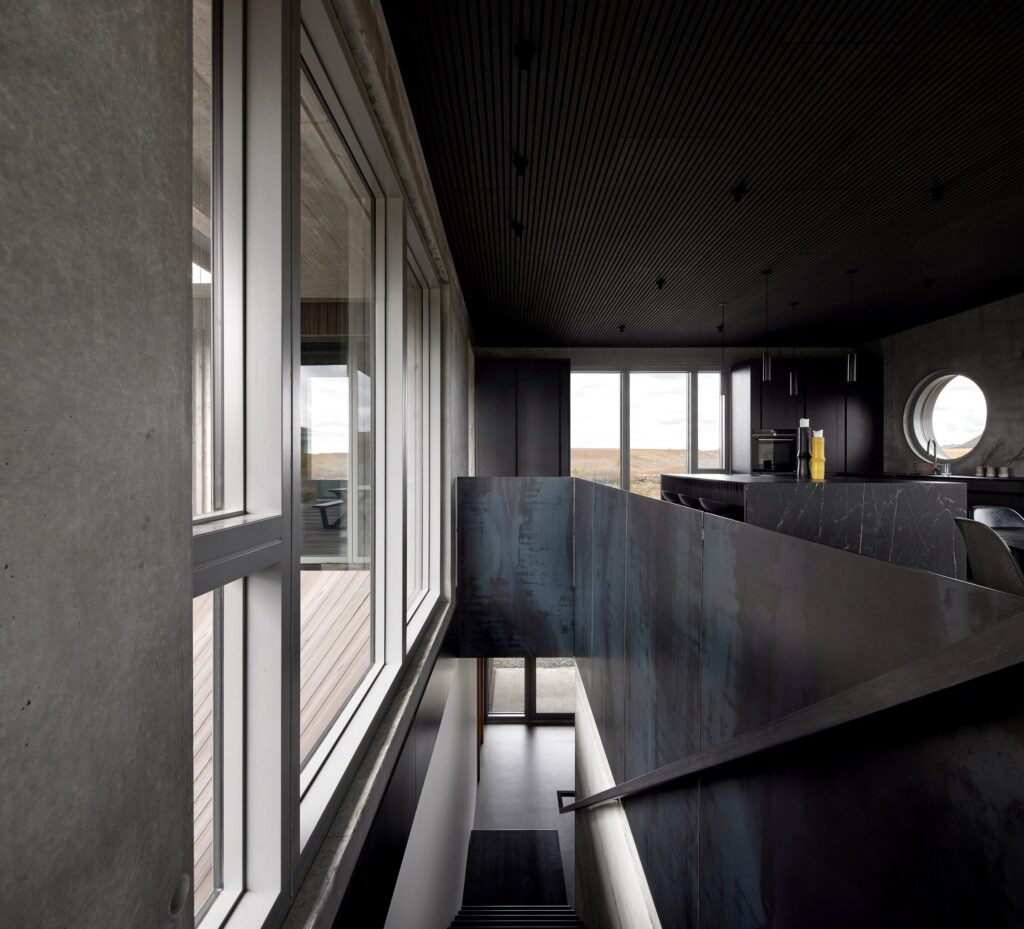
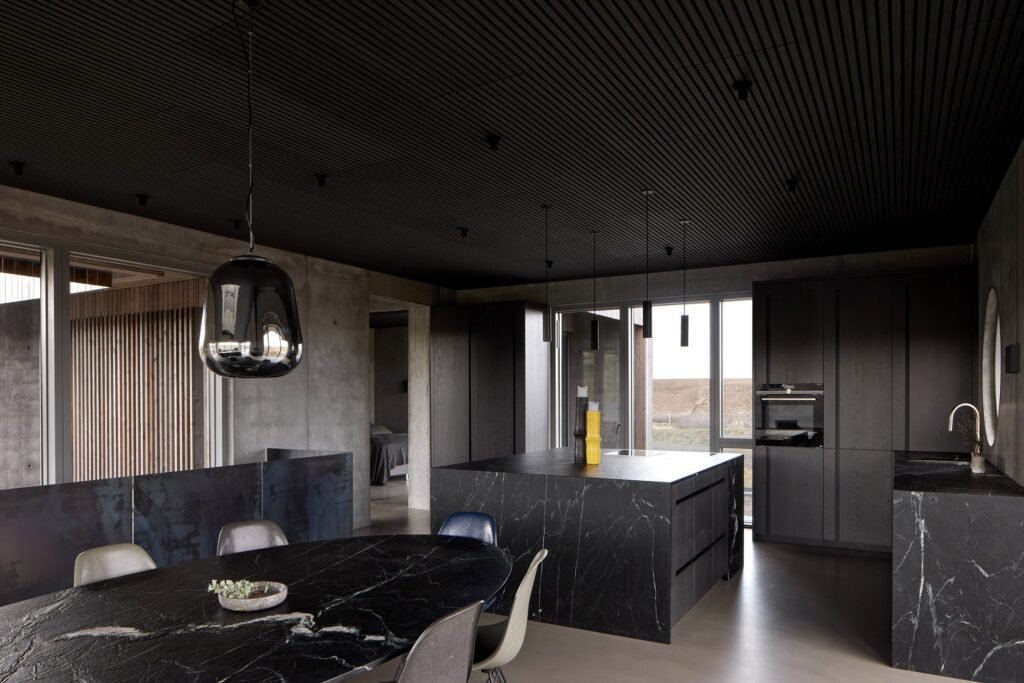
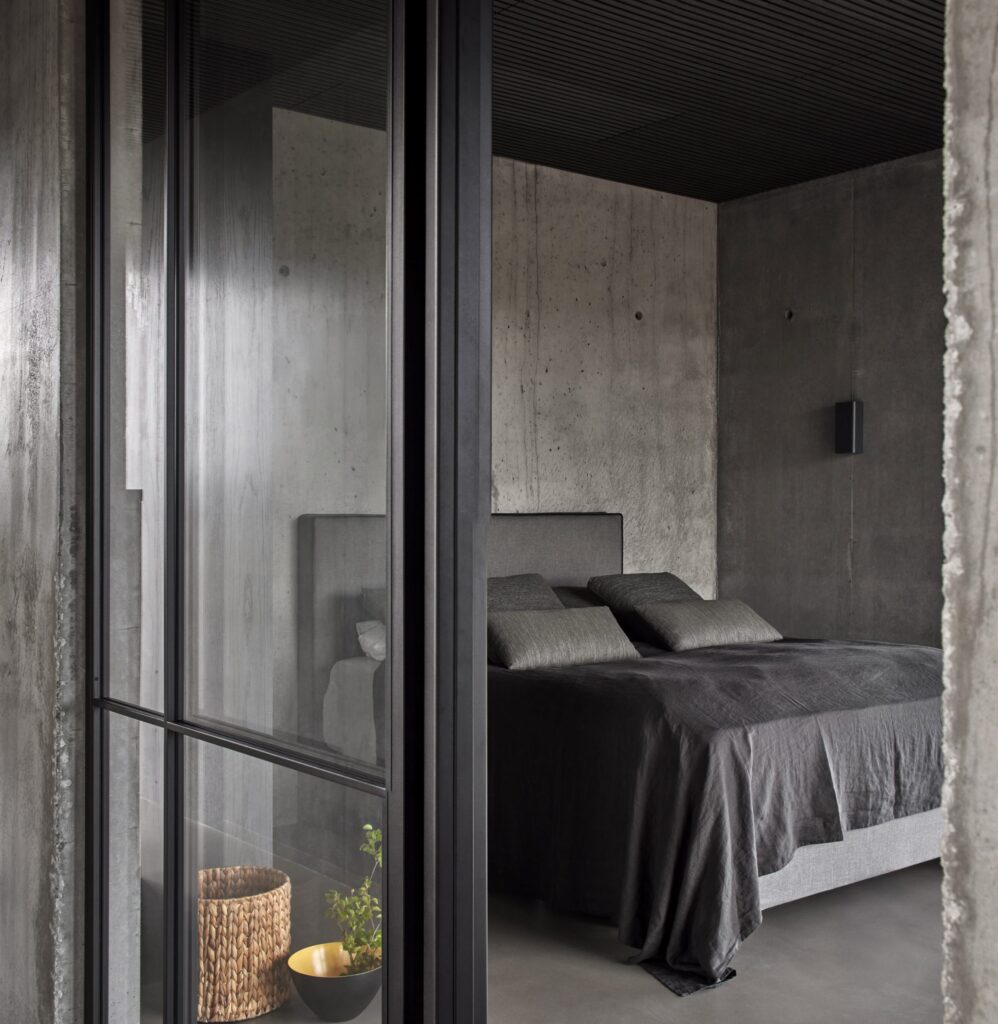
The material palette is moody and tactile, utilizing dark steel, concrete, and marble to reference the craggy surface and geological processes of the region.
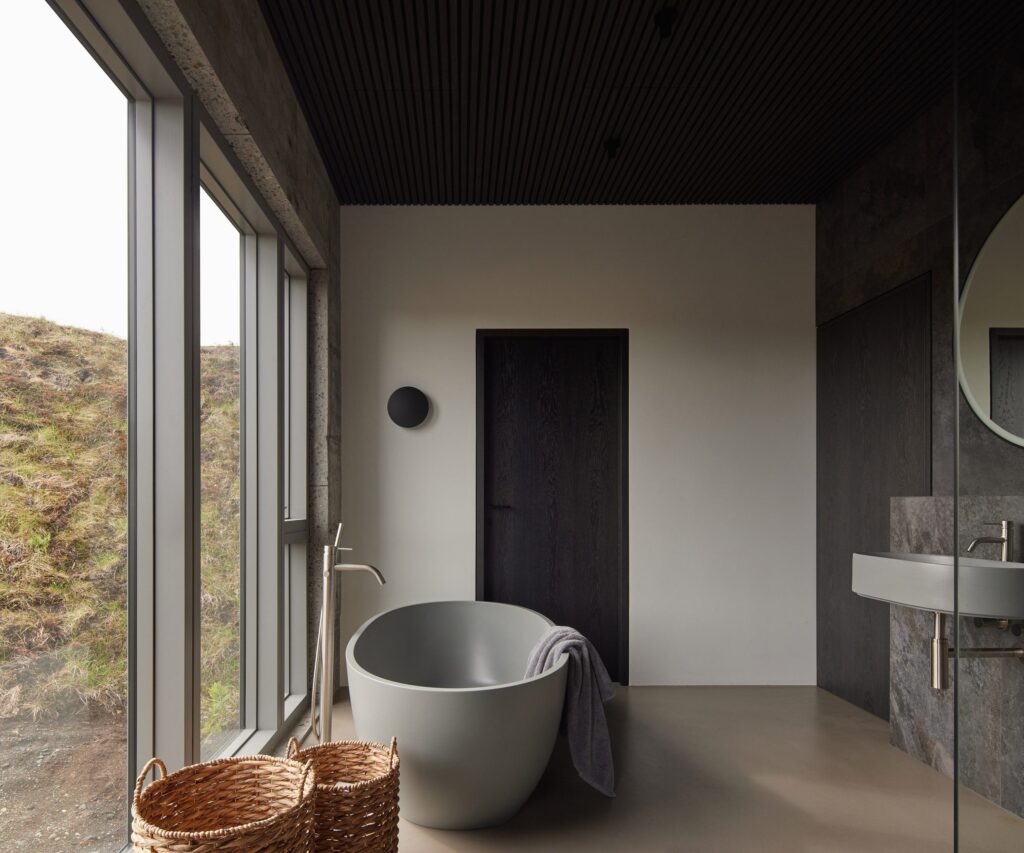
This palette of greys extends to the furniture and soft furnishings, including areas of black-stained timber storage. This darkness serves a dual purpose: it grounds the interior in the local geology, but it also acts as a perfect frame for the views. When the interior is dark, the eyes are naturally drawn to the brightness of the snow-capped volcano and the vibrant green moss outside.
The design is littered with thoughtful architectural moments that pay homage to its location. Most notably, the living space is illuminated by a volcano-shaped skylight lined in concrete that projects from the roof—a playful yet brutalist nod to Hekla itself.
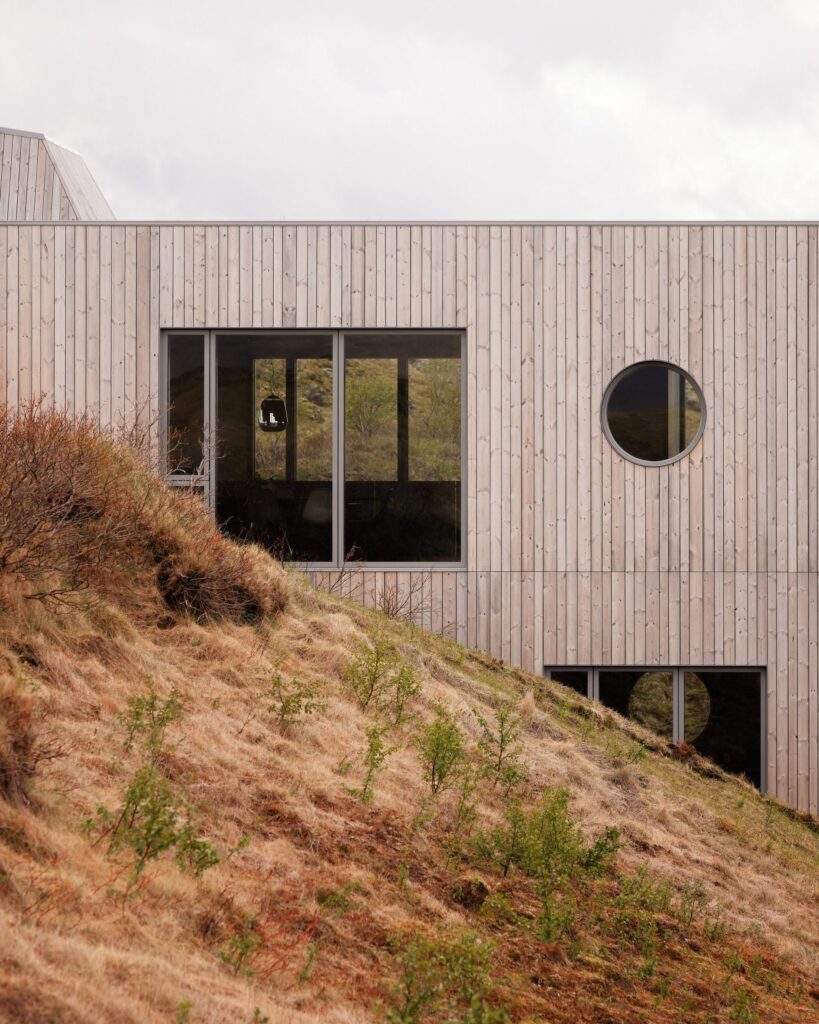
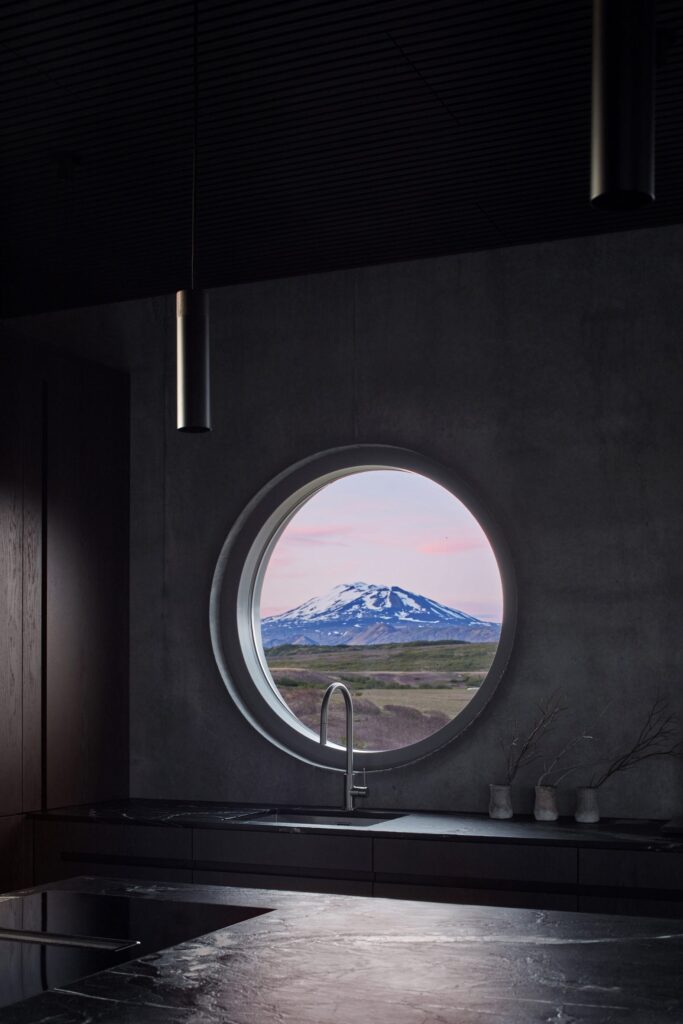
In the kitchen, a circular porthole window has been positioned with sniper-like precision to frame a view of the volcano in the distance, turning the mountain into a piece of living art.
The exterior cladding, made of thermally-treated timber planks, is designed to age gracefully, gradually silvering over time to match the overcast skies and the weathered stone.
Swan Nest is a rugged, beautiful retreat that doesn’t try to conquer its environment, but rather sits in quiet, respectful conversation with it.